
Schema integrity
Define keys, constraints and transaction boundaries around valid business states.
Which invariants must hold even when application code fails?
A database design should protect the meaning of records as well as serve queries. PostgreSQL planning combines relationships and transactions with access control, migration safety and recovery expectations.
Plan your PostgreSQL projectDefine keys, constraints and transaction boundaries around valid business states.
Use representative queries and execution plans to guide indexes and pagination choices.
Plan least-privilege roles, backup verification and migration rollback or forward recovery.
PostgreSQL data design with enforceable constraints, workload-aware indexing and practical recovery planning.
Which invariants must hold even when application code fails? What data loss and recovery time are acceptable? Which queries and growth assumptions need measurement?
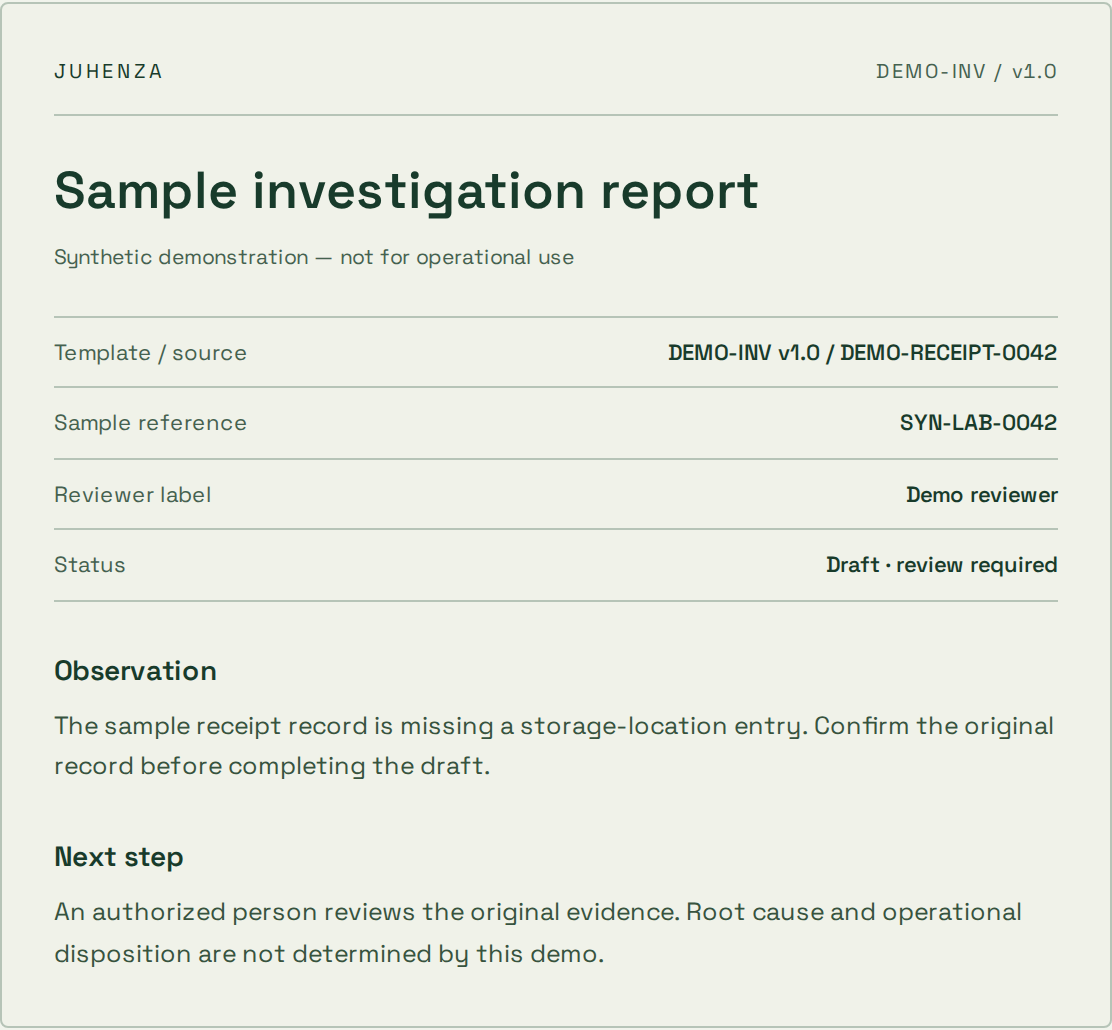
Edit an observation. Inspect the generated draft. Confirm your sample review before exporting a PDF.
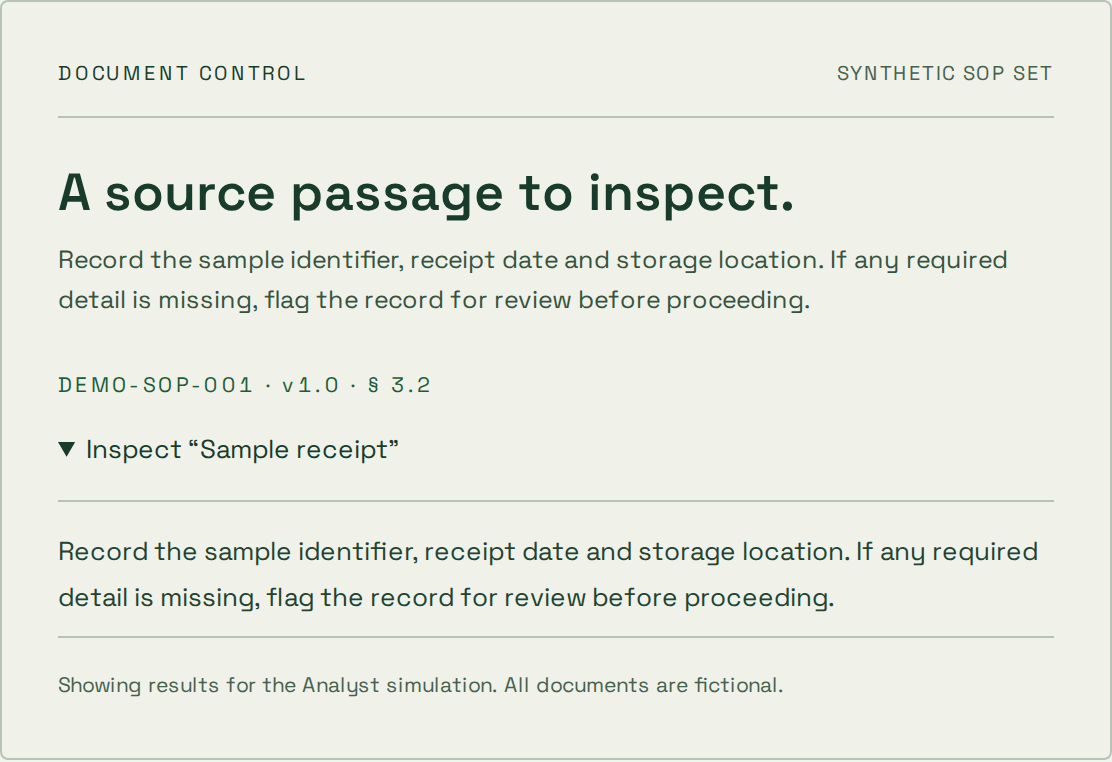
Explore a synthetic SOP library and inspect the source passage. Try a restricted role or an unsupported question.
The problem is clear, but the approach is not.
A bounded experiment, findings and a recommendation on what to validate next.
A prototype is not a production-ready service.
You know the workflow and can agree acceptance checks.
Agreed deliverables, verification evidence and operating instructions for the scoped release.
Changes to scope need an explicit decision on cost and timing.
A live system needs focused changes or ongoing care.
A prioritized backlog, reviewed changes and an agreed maintenance or support boundary.
Coverage, response targets and access are agreed per engagement.
Define keys, constraints and transaction boundaries around valid business states.
Use representative queries and execution plans to guide indexes and pagination choices.
Plan least-privilege roles, backup verification and migration rollback or forward recovery.
Practical answers before the build. Bring the details of your project to the conversation.
PostgreSQL data design with enforceable constraints, workload-aware indexing and practical recovery planning. The scope can include schema integrity, query performance, recovery and access. Deliverables depend on the agreed workflow and existing systems.
Teams selecting a relational database or improving the reliability of an existing data layer.
Bring the workflow, user roles, existing systems and anonymized examples. Which invariants must hold even when application code fails? Start with a local project brief and share it when you are ready.
The estimate depends on the workflows, integrations, data, review requirements and operating responsibilities. These are agreed for the individual project. A planning brief does not book work or establish a delivery commitment.
Bring the problem you want solved. We’ll shape it into a project brief you can keep — or let AI draft a first approach.