
Application structure
Separate features, shared services and route access so business rules have clear owners.
Which conventions should all feature teams share?
Angular brings routing, dependency injection and interface composition into a coordinated framework. Evaluate that structure against the team's maintenance needs and the complexity of the user journeys.
Plan your Angular projectSeparate features, shared services and route access so business rules have clear owners.
Model validation, asynchronous submission and recovery without relying on client checks for authorization.
Choose rendering behavior per route and measure bundles, keyboard access and loading states.
Structured Angular applications with typed forms, reusable components and explicit routing boundaries.
Which conventions should all feature teams share? Which routes need server rendering or search discovery? Where will server validation and access checks run?
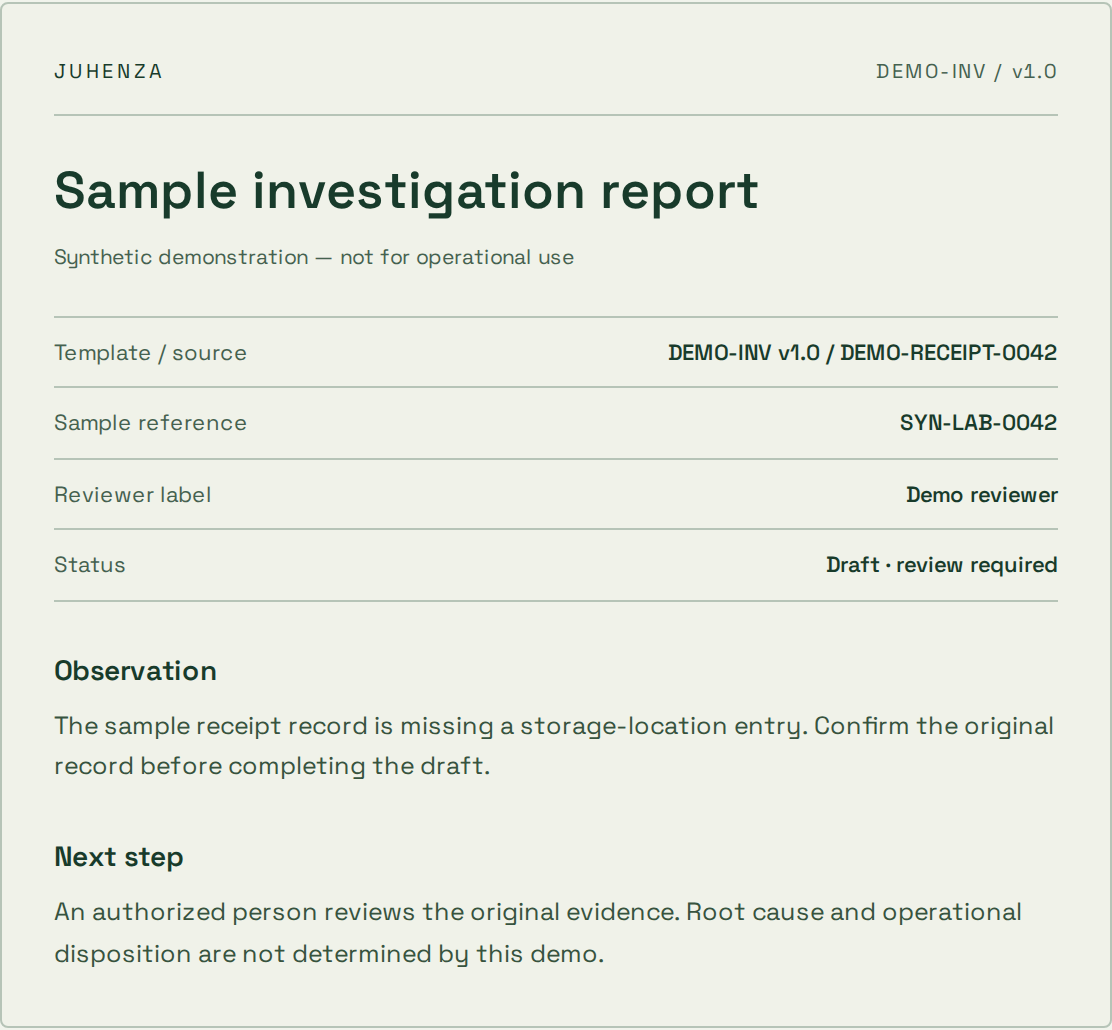
Edit an observation. Inspect the generated draft. Confirm your sample review before exporting a PDF.
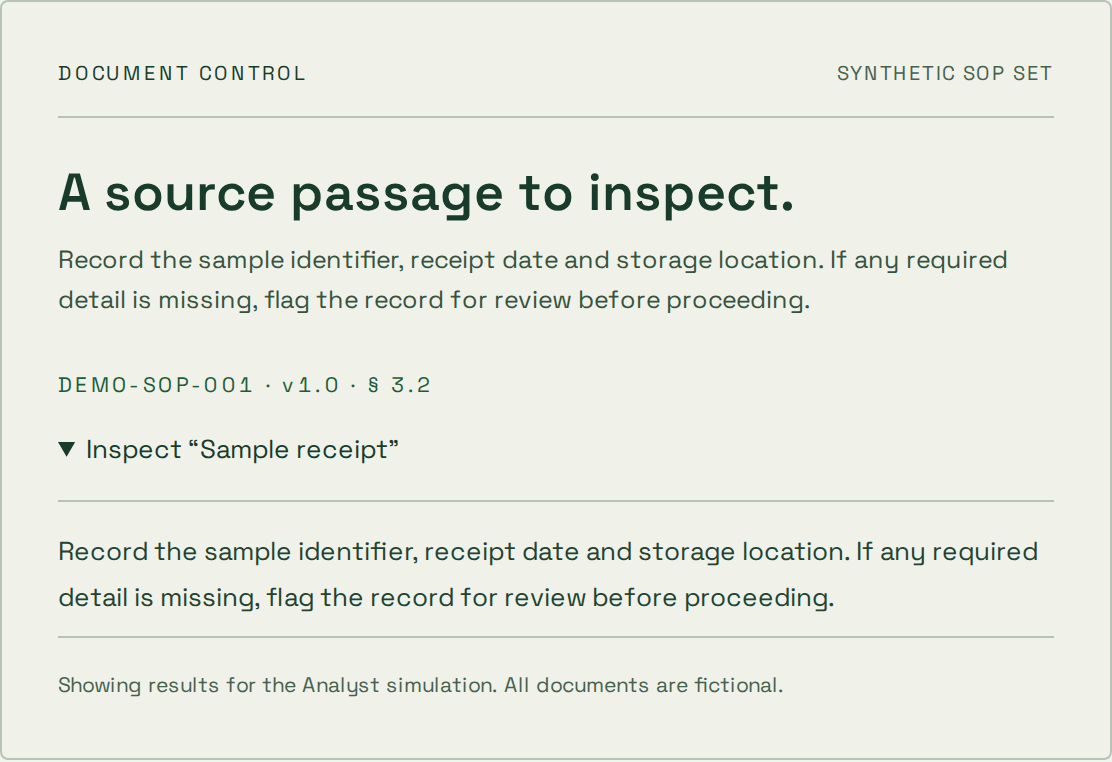
Explore a synthetic SOP library and inspect the source passage. Try a restricted role or an unsupported question.
The problem is clear, but the approach is not.
A bounded experiment, findings and a recommendation on what to validate next.
A prototype is not a production-ready service.
You know the workflow and can agree acceptance checks.
Agreed deliverables, verification evidence and operating instructions for the scoped release.
Changes to scope need an explicit decision on cost and timing.
A live system needs focused changes or ongoing care.
A prioritized backlog, reviewed changes and an agreed maintenance or support boundary.
Coverage, response targets and access are agreed per engagement.
Separate features, shared services and route access so business rules have clear owners.
Model validation, asynchronous submission and recovery without relying on client checks for authorization.
Choose rendering behavior per route and measure bundles, keyboard access and loading states.
Practical answers before the build. Bring the details of your project to the conversation.
Structured Angular applications with typed forms, reusable components and explicit routing boundaries. The scope can include application structure, forms and feedback, rendering and delivery. Deliverables depend on the agreed workflow and existing systems.
Teams planning a substantial browser application with shared conventions across contributors.
Bring the workflow, user roles, existing systems and anonymized examples. Which conventions should all feature teams share? Start with a local project brief and share it when you are ready.
The estimate depends on the workflows, integrations, data, review requirements and operating responsibilities. These are agreed for the individual project. A planning brief does not book work or establish a delivery commitment.
Bring the problem you want solved. We’ll shape it into a project brief you can keep — or let AI draft a first approach.