Reuse behavior, not just appearance
A component can carry a consistent interaction, validation message and accessible state across multiple screens. That gives future changes a clear place to live.
React development for customer portals, SaaS interfaces and internal tools. We connect reusable components, clear state and reliable API contracts to the tasks your users need to complete.
Plan your React projectA component can carry a consistent interaction, validation message and accessible state across multiple screens. That gives future changes a clear place to live.
Loading, empty, failed and saved states help people understand what the application is doing. We model those states around actual API behavior.
Public content and authenticated workspaces have different rendering and caching needs. React can participate in either approach through the selected application framework.
Use typed component inputs and domain models to make interface contracts easier to review. Validate external data at runtime as well.
Check required fields, optional values and malformed API responses.
Separate interface state from server-owned records. Document successful requests, authorization boundaries and recoverable failures.
Check validation, duplicate submissions and denied access.
Choose server and client responsibilities around the route. Keep interactive controls close to the data they need and keep credentials on the server.
Review caching, private records and which content is present in the initial response.
Define components around the product’s recurring tasks, with shared tokens and responsive behavior. Reuse clear contracts instead of copying entire screens.
Inspect keyboard use, narrow layouts and long or missing content.
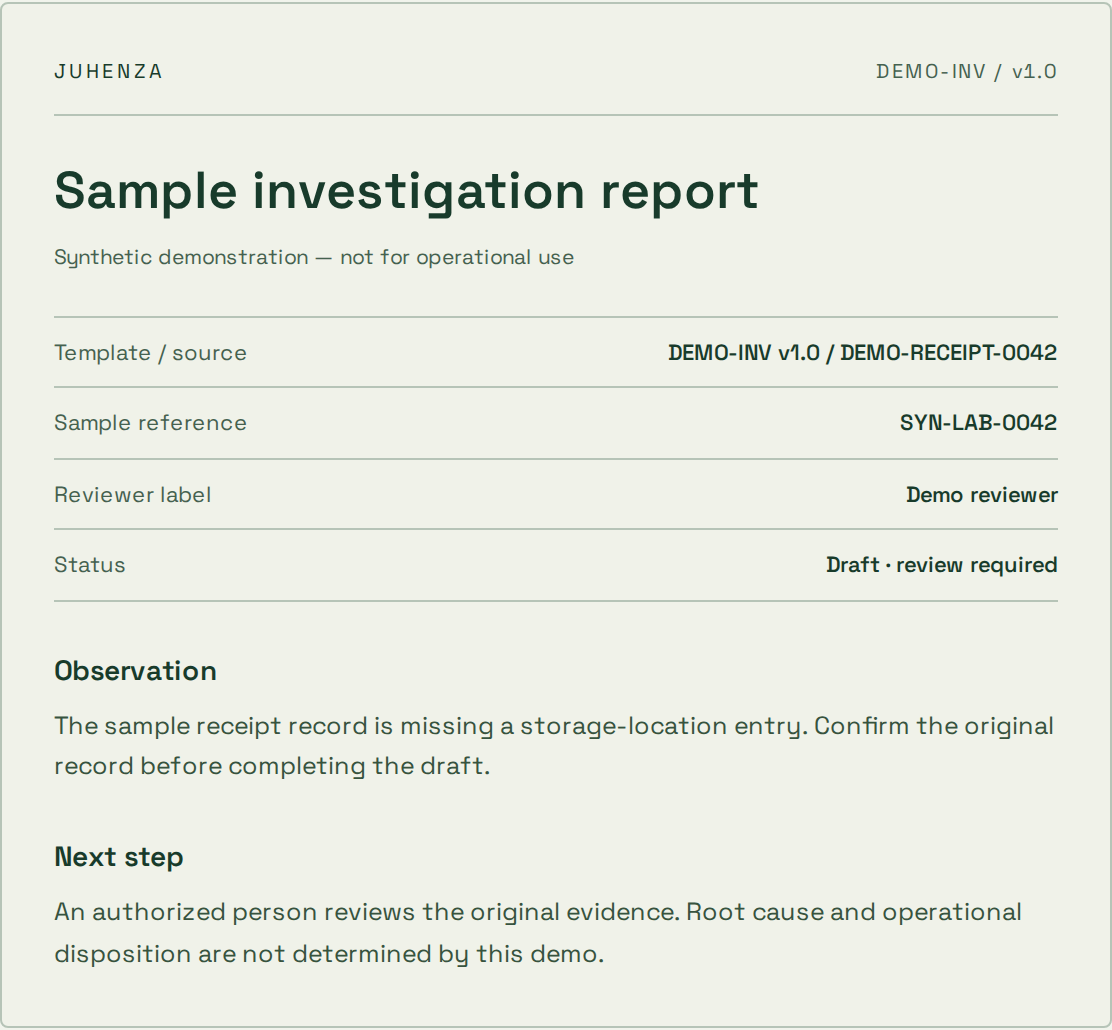
Edit an observation. Inspect the generated draft. Confirm your sample review before exporting a PDF.

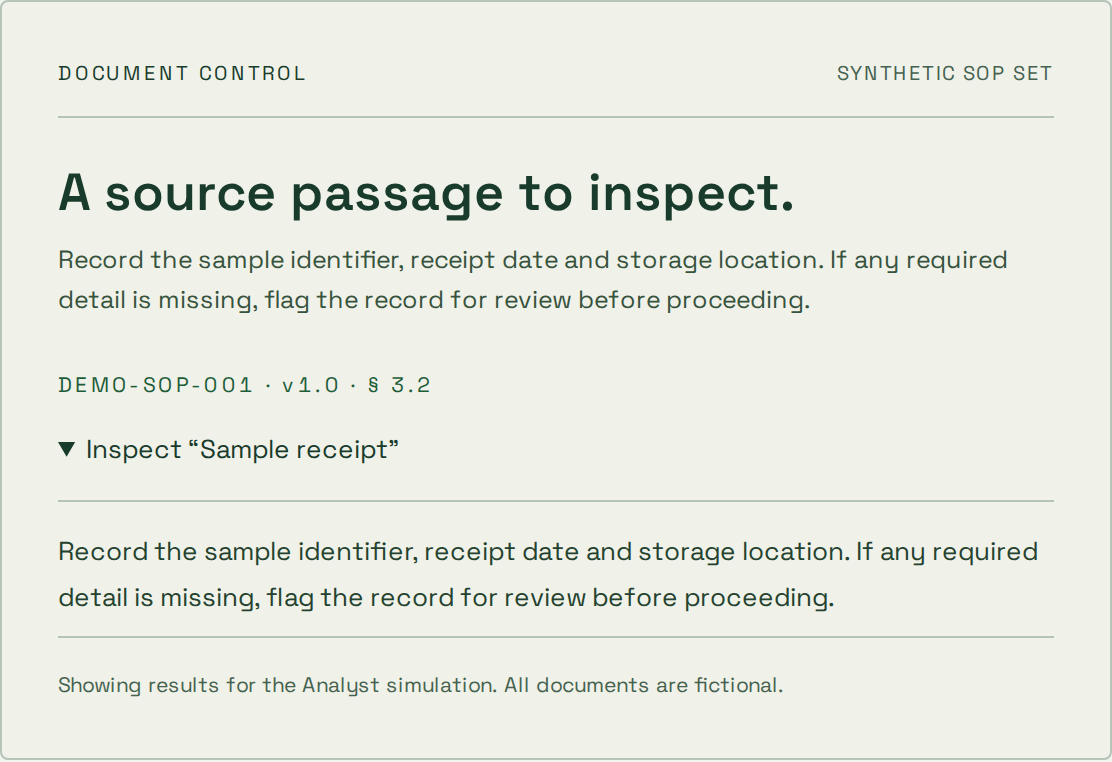
Explore a synthetic SOP library and inspect the source passage. Try a restricted role or an unsupported question.

The problem is clear, but the approach is not.
A bounded experiment, findings and a recommendation on what to validate next.
A prototype is not a production-ready service.
You know the workflow and can agree acceptance checks.
Agreed deliverables, verification evidence and operating instructions for the scoped release.
Changes to scope need an explicit decision on cost and timing.
A live system needs focused changes or ongoing care.
A prioritized backlog, reviewed changes and an agreed maintenance or support boundary.
Coverage, response targets and access are agreed per engagement.
Design reusable components around task states rather than copying screen markup. Define how forms, navigation and data updates behave with real API responses.
Separate server records from temporary interface state. Plan loading, errors and updates so a user can understand what has been saved.
Choose rendering and code delivery around public discovery, interaction needs and the existing application. Measure the important journeys.
Practical answers before the build. Bring the details of your project to the conversation.
Yes. Start with the affected journeys, component boundaries, dependencies and API contracts. That review helps define whether targeted changes or a larger restructuring is appropriate.
No. Rendering strategy, delivered JavaScript, content, network behavior and implementation choices all matter. Performance and crawlable content need to be checked on the built site.
React Native is a separate mobile approach with shared concepts. Components and device behavior are not automatically interchangeable; native modules, platform conventions and release needs must be scoped.
Start with which state is local, which is shared and which belongs to the server. Choose additional libraries only where the actual update and coordination requirements justify them.
Bring the problem you want solved. We’ll shape it into a project brief you can keep — or let AI draft a first approach.