
Give access a clear owner
Administrative access, application accounts and recovery contacts must be distinguishable and accountable.
Review permissions and the process for joining, changing roles and leaving.
Linux setup and managed server work around application requirements, approved access, updates, service monitoring and recovery.
Plan your Linux projectAdministrative access, application accounts and recovery contacts must be distinguishable and accountable.
Document service configuration and update responsibilities around the application and its dependencies.
The useful measure is whether the service and its records can be restored under the agreed conditions.
Establish the required accounts, networking and application dependencies through an approved setup.
Check exposed services, permissions and configuration ownership.
Observe useful service signals and route failures to a responsible person.
Review alert usefulness, log access and escalation contacts.
Recover the application’s persistent records and necessary configuration in an isolated test.
Compare the recovery with agreed downtime and data-loss objectives.
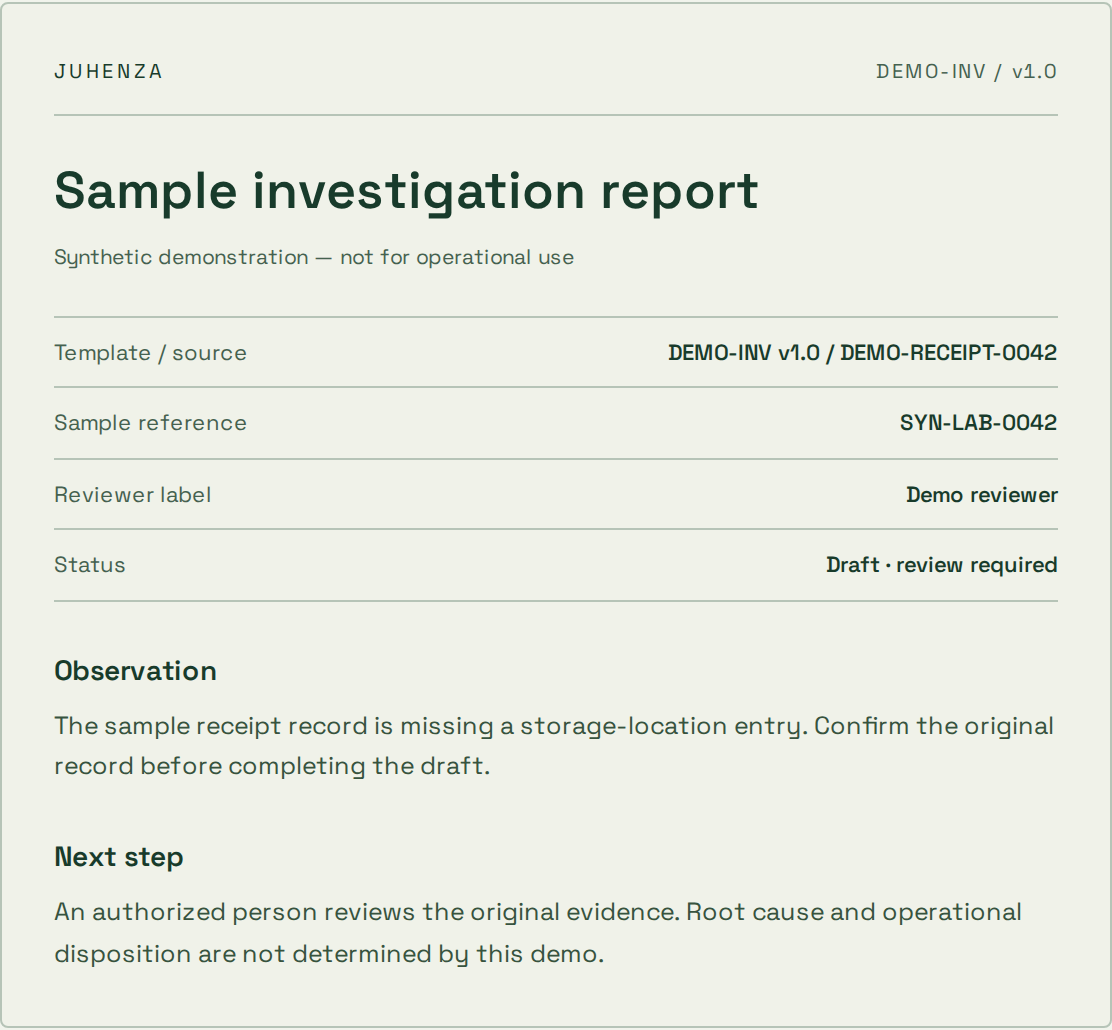
Edit an observation. Inspect the generated draft. Confirm your sample review before exporting a PDF.
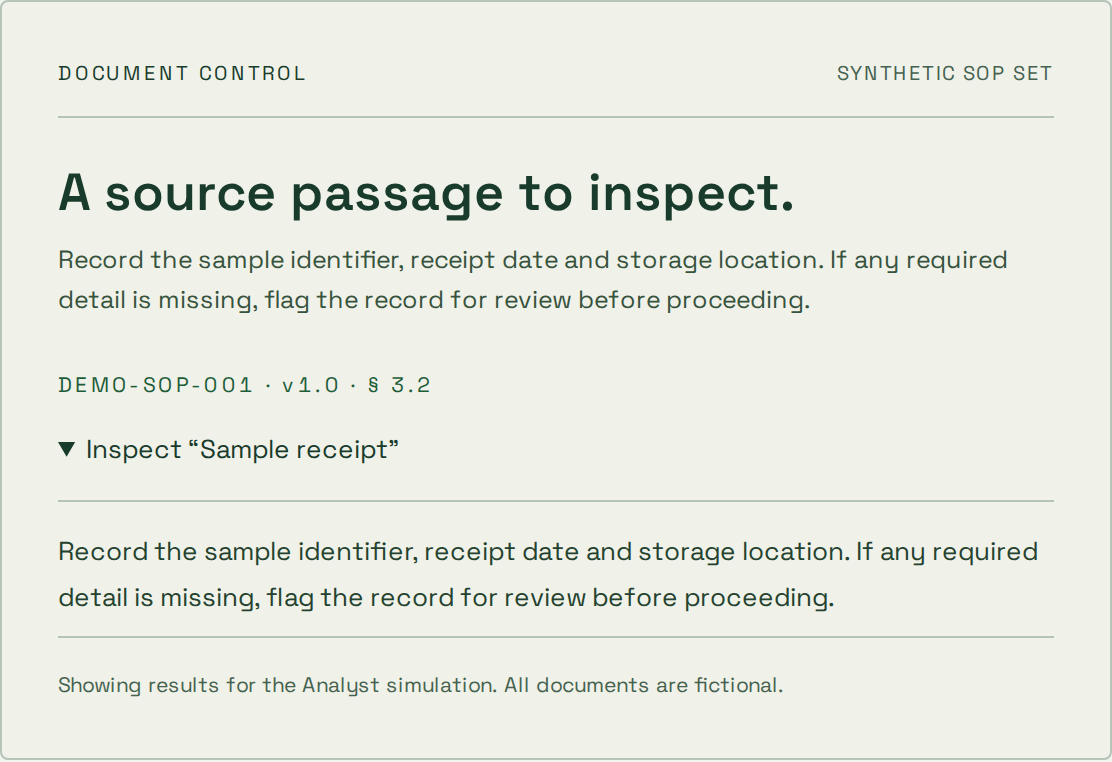
Explore a synthetic SOP library and inspect the source passage. Try a restricted role or an unsupported question.
The problem is clear, but the approach is not.
A bounded experiment, findings and a recommendation on what to validate next.
A prototype is not a production-ready service.
You know the workflow and can agree acceptance checks.
Agreed deliverables, verification evidence and operating instructions for the scoped release.
Changes to scope need an explicit decision on cost and timing.
A live system needs focused changes or ongoing care.
A prioritized backlog, reviewed changes and an agreed maintenance or support boundary.
Coverage, response targets and access are agreed per engagement.
Define users, network access, application dependencies and approved administrative access before exposing services.
Plan package updates, service configuration, logs and operational ownership around the workload and agreed support scope.
Identify persistent records and configuration, test restoration and document the response to common service failures.
Practical answers before the build. Bring the details of your project to the conversation.
Covered systems, support hours, update ownership, access, escalation and recovery responsibilities. Response commitments must be agreed explicitly.
Yes, within an approved access and review scope. Begin with the workload, owners, dependencies and priority operating problems.
Agree the schedule against system changes and business risk. A backup-job success message alone does not demonstrate recovery readiness.
Bring the problem you want solved. We’ll shape it into a project brief you can keep — or let AI draft a first approach.