Next.js development.Public pages and product workflows, with clear rendering boundaries.

Next.js application development for public websites, portals and software products. We scope rendering, data access and deployment around freshness, permissions and the user journey.

Plan your Next.js project
Next.jsRendering and application routing

Why choose
Next.js?

Start with the task and operating constraints. These benefits depend on deliberate engineering decisions.

Separate server and browser responsibilities

Server-side work can access approved data and private configuration. Browser-side components handle the interactions that need local state and events.

Review what crosses the boundary and keep secrets outside client bundles.
Match freshness to the workflow

A content page and a live account record do not have the same update needs. Define caching and refresh behavior against the task.

Test whether user-specific information can appear in shared responses.

Plan the runtime with the product

Deployment choices affect rendering, background work, observability and maintenance. Treat those as architecture decisions before launch.

Confirm platform capabilities and the people who will operate releases.

How the pieces
work together.

Expand a pattern to inspect responsibilities and review questions. Final choices depend on your project requirements.

Public content + interactive controls

Keep useful public content available in the initial page while adding focused interactive components.

  1. Content source
  2. Server-rendered route
  3. Client interaction
Review the boundary

Inspect initial content, metadata and failures loading optional interactions.

Authenticated application routes

Protect record access on the server and send only the data the current user needs.

  1. User session
  2. Authorized data access
  3. Account interface
Review the boundary

Check record-level permissions, cache boundaries and session expiry.

API-backed product workflows

Connect route data and mutations to explicit contracts, with a clear outcome after each user action.

  1. Route & form
  2. Validation & API
  3. Updated view
Review the boundary

Test invalid inputs, repeated actions and partial failures.

A stack with
clear responsibilities.

A project does not need every tool. Each addition should have a defined role.

The ecosystem.
Behind the experience.

Interfaces, application logic, data and operations. The building blocks work together around your project.

Frontend Development

  • React
  • Angular
  • JavaScript
  • HTML5
  • CSS3

Backend Development

  • Node.js
  • Express.js
  • Laravel
  • PHP

Database

  • MySQL
  • PostgreSQL
  • MongoDB
  • Firebase

Cloud & DevOps

  • Azure
  • AWS
  • Google Cloud
  • Docker
  • Jenkins

Software you can
actually explore.

Inspect the interface, change the inputs and follow the output. These public demonstrations use synthetic records.

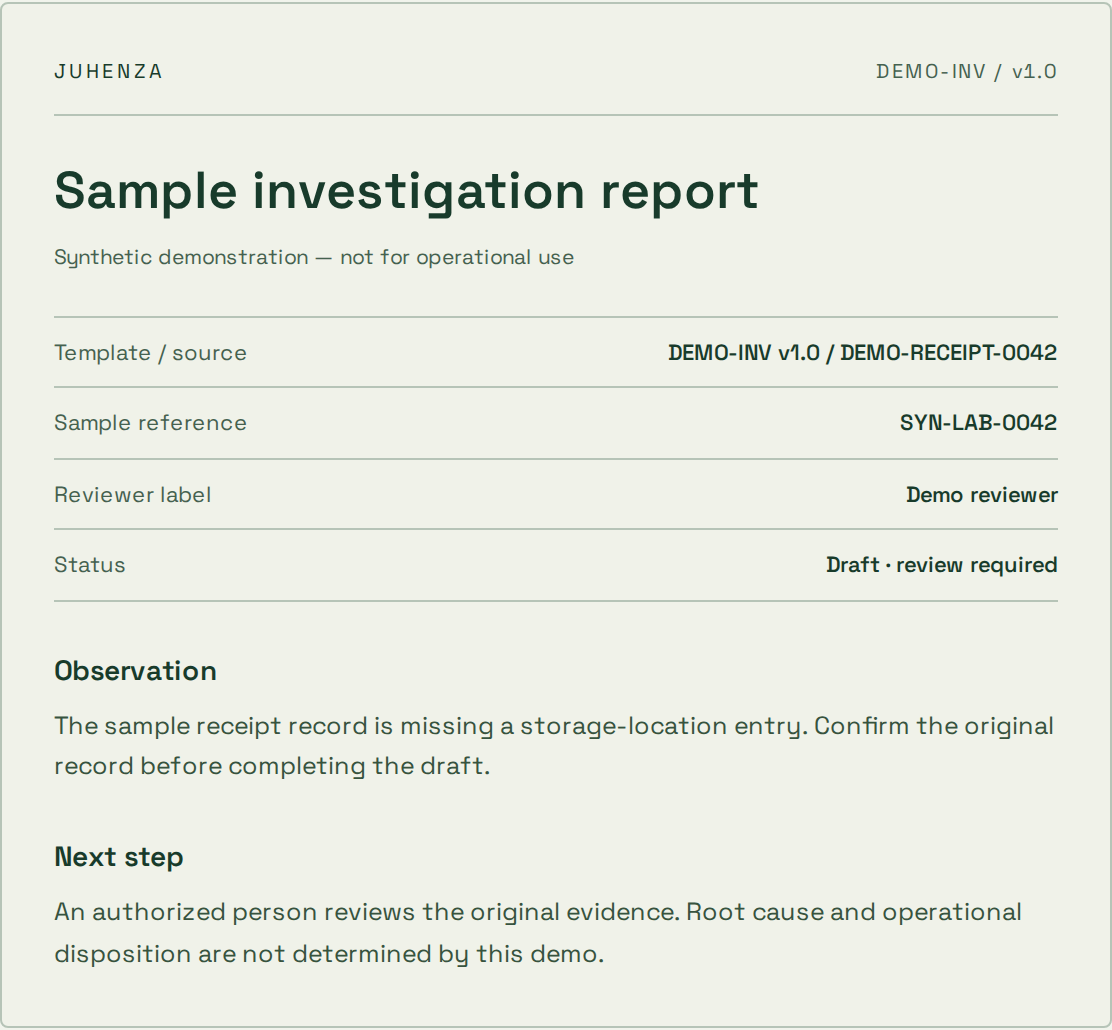
From a missing detail to a reviewable report.

Edit an observation. Inspect the generated draft. Confirm your sample review before exporting a PDF.

  • Live input and output
  • Visible source references
  • Human review before export
Explore the report demo
Actual sample report preview with source references, synthetic observation and review status

Ask a question. See where the answer comes from.

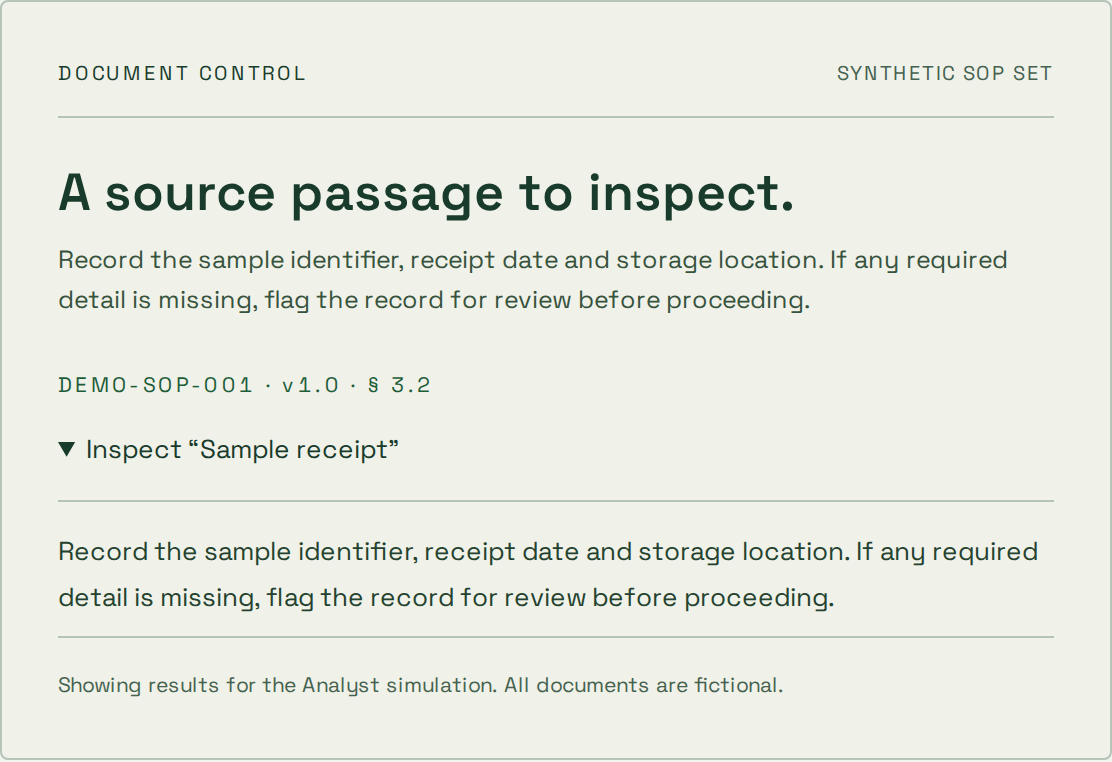
Explore a synthetic SOP library and inspect the source passage. Try a restricted role or an unsupported question.

  • Inspectable source passages
  • Simulated access boundaries
  • Deterministic topic search
Explore the document demo
Actual synthetic SOP source passage and document citation from the document assistant demo

Start where
your project is.

The first step depends on what is already known. These starting points help define an engagement; scope, price and timing are agreed separately.

Explore an uncertain idea

The problem is clear, but the approach is not.

  1. 1Question
  2. 2Prototype
  3. 3Decision

What you take forward

A bounded experiment, findings and a recommendation on what to validate next.

A prototype is not a production-ready service.

Deliver a defined scope

You know the workflow and can agree acceptance checks.

  1. 1Scope
  2. 2Build & review
  3. 3Handover

What you take forward

Agreed deliverables, verification evidence and operating instructions for the scoped release.

Changes to scope need an explicit decision on cost and timing.

Improve an existing system

A live system needs focused changes or ongoing care.

  1. 1Review
  2. 2Prioritize
  3. 3Release & observe

What you take forward

A prioritized backlog, reviewed changes and an agreed maintenance or support boundary.

Coverage, response targets and access are agreed per engagement.

How project pricing works

A useful foundation.
Before the first release.

Agree the boundaries that make the implementation maintainable as well as functional.
  1. Public and authenticated routes

    Distinguish public content from account-specific workflows. Choose rendering and caching behavior with data freshness and access requirements in mind.

  2. Application integration

    Connect interfaces to APIs and approved data services. Keep server-only configuration and credentials outside browser code.

  3. Deployment and maintenance

    Plan the runtime, updates, error reporting and release ownership. Review framework changes against the application’s regression checks.

Questions about
Next.js?

Practical answers before the build. Bring the details of your project to the conversation.

When does a project need Next.js?

It can fit a React application that needs coordinated routing, rendering and server capabilities. The choice should follow the product, deployment constraints and maintenance needs.

Can you work with an existing Next.js codebase?

Yes. Review the current routing approach, framework version, data access, caching and deployment before defining changes.

Does server rendering guarantee SEO results?

No. It can make content available to crawlers, but indexing and visibility also depend on content quality, access, canonical signals and the search engine’s decisions.

Plan the next decision.

Still have questions?
Start with the brief.

Bring the problem you want solved. We’ll shape it into a project brief you can keep — or let AI draft a first approach.