
Describe meaningful domain boundaries
Types can document which records, roles and states are valid in the application, helping changes stay consistent across modules.
Avoid replacing clear domain models with broad assertions or unchecked casts.
TypeScript development and adoption for React interfaces, Node.js services and shared domain models. We strengthen contracts while keeping runtime validation explicit.
Plan your TypeScript projectTypes can document which records, roles and states are valid in the application, helping changes stay consistent across modules.
Shared types can expose mismatched assumptions when an API or component contract changes.
An existing application can move toward stronger checks around important workflows instead of changing everything at once.
Define component inputs and event outcomes around the task being implemented.
Check optional content, discriminated states and event handling.
Model expected responses and validate unknown data before the application uses it.
Test malformed, missing and version-changed fields.
Introduce checks in bounded modules and replace unclear assumptions as they are reviewed.
Review build changes and behavior rather than treating a successful compile as proof.
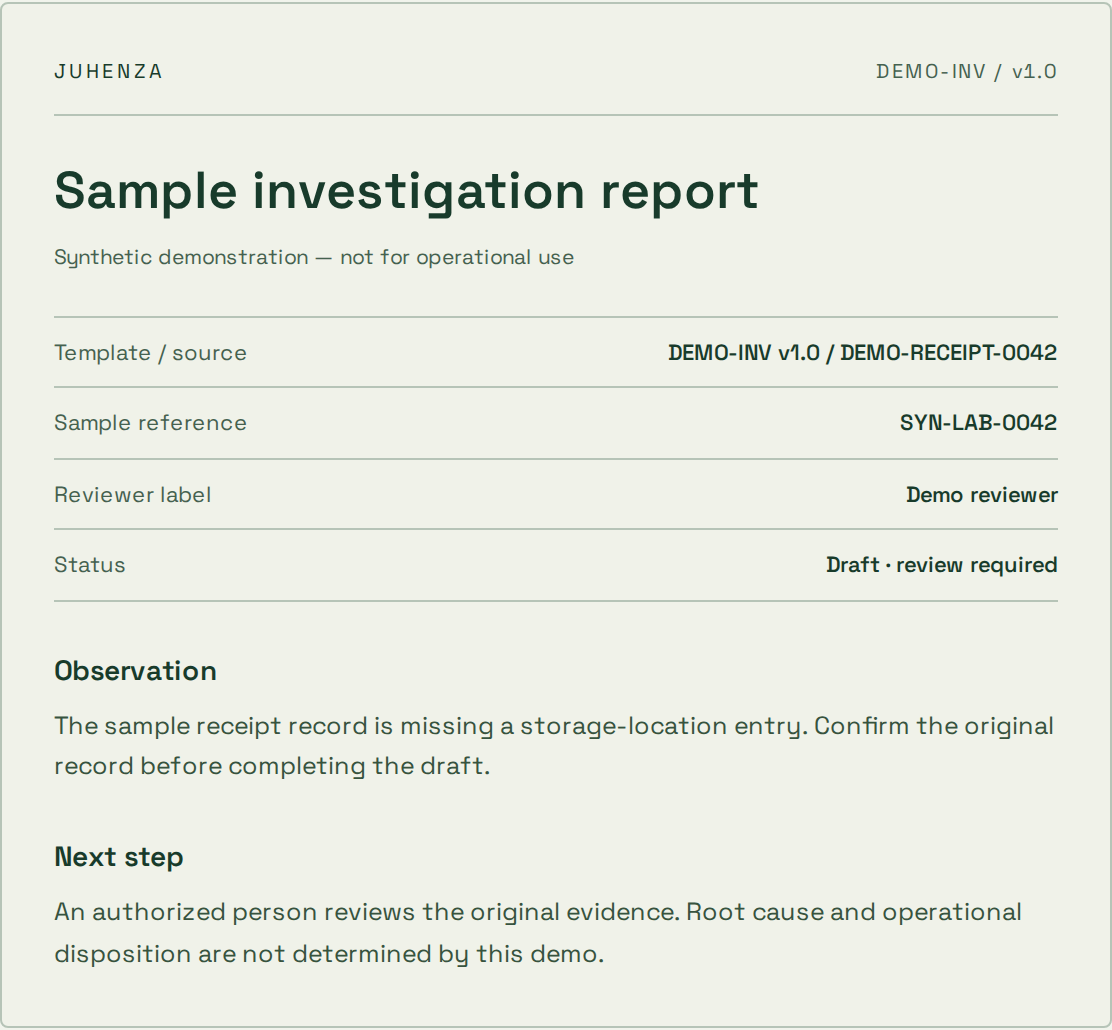
Edit an observation. Inspect the generated draft. Confirm your sample review before exporting a PDF.
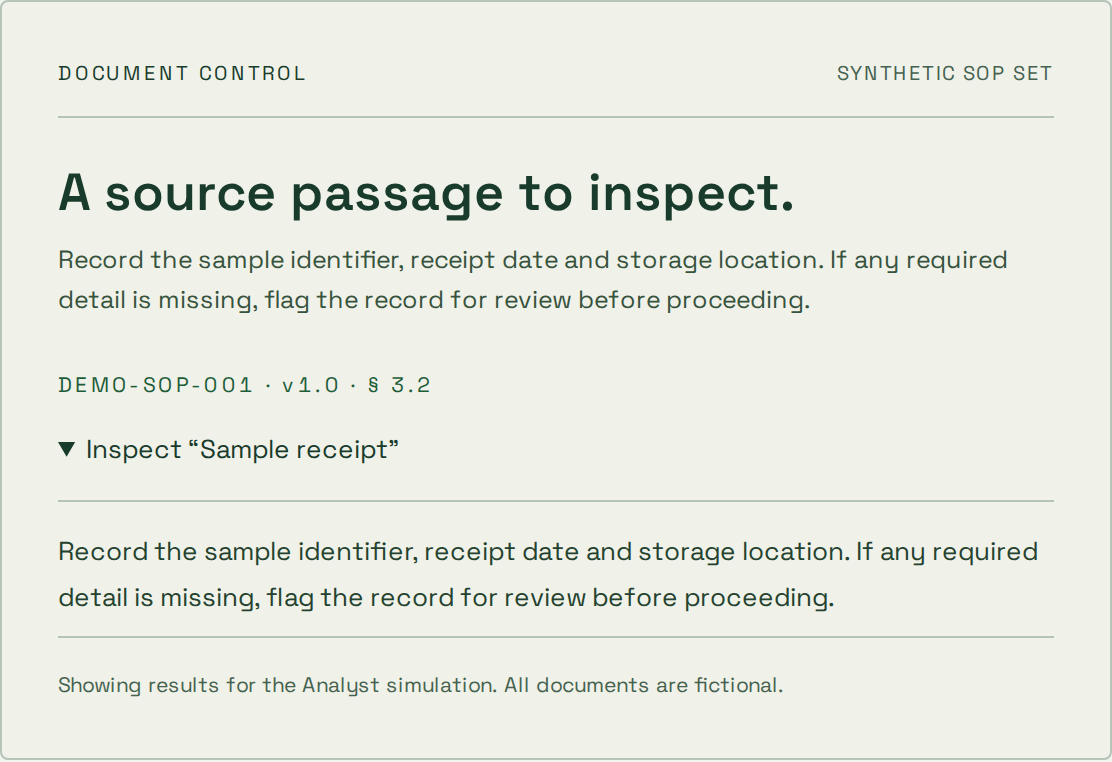
Explore a synthetic SOP library and inspect the source passage. Try a restricted role or an unsupported question.
The problem is clear, but the approach is not.
A bounded experiment, findings and a recommendation on what to validate next.
A prototype is not a production-ready service.
You know the workflow and can agree acceptance checks.
Agreed deliverables, verification evidence and operating instructions for the scoped release.
Changes to scope need an explicit decision on cost and timing.
A live system needs focused changes or ongoing care.
A prioritized backlog, reviewed changes and an agreed maintenance or support boundary.
Coverage, response targets and access are agreed per engagement.
Define shared types around records and domain rules. Types make assumptions visible but do not replace runtime validation of external data.
Validate APIs, imported files and user inputs at the boundary. Keep server and browser responsibilities explicit.
Review module boundaries and high-risk paths before changing an existing codebase. Adopt stronger checks in manageable increments with regression coverage.
Practical answers before the build. Bring the details of your project to the conversation.
No. Its checks operate during development and compilation. Network inputs, files and user data still need runtime validation and appropriate failure handling.
Yes. Review build support and module boundaries, then prioritize the changes that clarify important contracts.
Choose a level the project can maintain, and strengthen checks with explicit adoption steps. Avoid suppressing errors without understanding the underlying contract.
Bring the problem you want solved. We’ll shape it into a project brief you can keep — or let AI draft a first approach.