

Internal tools and customer portals
Give staff a shared place to record requests, review exceptions and approve work. Give customers a portal to submit information and see what happens next.
JUHENZA is a founder-led custom software development company based in Gujarat, India. We build internal tools, customer portals and SaaS products for teams replacing spreadsheets, launching a product or extending software they already use.
Custom Software Development covers Internal tools and customer portals, SaaS products and business platforms, and Mobile and desktop applications. A typical engagement starts with the “Scope the first release” stage, with scope, acceptance checks and ownership agreed before the build.
Written and maintained by J. Prajapati, Founder & Director · Last updated
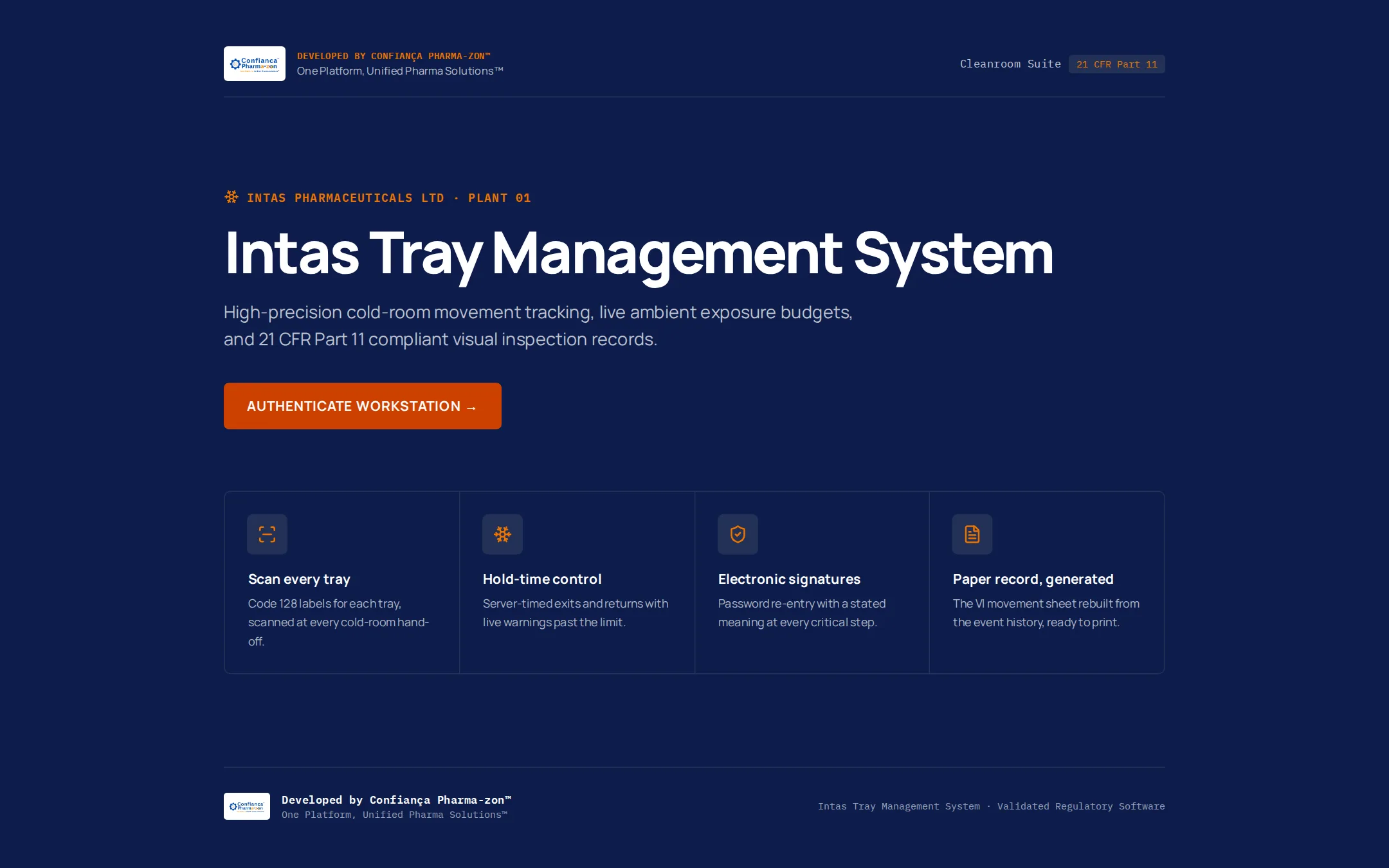
A live tray-management build connecting barcode hand-offs, server-timed hold periods and electronic-signature steps to printable movement records. Part 11–oriented features are engineering scope, not a claim of validated compliance or client endorsement.
Projects retain their own brands and operators. These case studies describe the software and its scope; they do not imply client endorsement or regulatory certification.
From a single approval workflow to a new software product.
Give staff a shared place to record requests, review exceptions and approve work. Give customers a portal to submit information and see what happens next.
Build a first release around one customer workflow, with the roles, administration and data boundaries it needs. Add more once users have tested the core flow.
Applications designed for the devices, connectivity and environments your users actually work in.
Connect an existing business system to a new application. Agree which system owns each record and how the team will spot and recover from failed syncs.
Walk through a real task with the people who do it. Agree which roles, records and exceptions the first release must handle, and write down how you will accept it.
Review a prototype before committing to the full build. Test working increments against representative data and revisit any workflow or integration decisions that surface.
Verify the agreed workflows and plan any data migration. Document deployment and day-to-day operations, and agree who owns hosting, maintenance and support after launch.
A reference web application structure. The interfaces, business rules and records have different responsibilities; the project scope determines which pieces are needed.
The screens people use to complete a task, on the devices and connections available to them.
Review navigation, loading and error states, keyboard access and the smallest supported screen.
Illustrative planning model. Your architecture and deliverables are agreed during scoping.
The problem is clear, but the approach is not.
A bounded experiment, findings and a recommendation on what to validate next.
A prototype is not a production-ready service.
You know the workflow and can agree acceptance checks.
Agreed deliverables, verification evidence and operating instructions for the scoped release.
Changes to scope need an explicit decision on cost and timing.
A live system needs focused changes or ongoing care.
A prioritized backlog, reviewed changes and an agreed maintenance or support boundary.
Coverage, response targets and access are agreed per engagement.
Technology is a scoping decision. These are relevant tools and building blocks to discuss against your existing systems, operating constraints and maintenance needs.
ReactNext.jsTypeScript
Choose rendering and interaction patterns around the user journeys, accessibility and public-page discovery requirements.
Node.jsTypeScriptAPIs
Define validation, permissions and business rules before connecting the interface to persistent records.
DockerLinux
Agree deployment, configuration, backups and maintenance responsibilities alongside the application.
Turn quality expectations into reviewable evidence. The exact checks and responsibilities belong in the project scope.
Check the complete task on phone and desktop, with keyboard navigation, empty records and recoverable errors.
Agree automated checks for important business rules and regression coverage for the workflows affected by each release.
Verify setup instructions, account ownership, deployment and restoration steps with the people who will operate the system.
Our product plans and
your source code ownership.
Our own products are intended to be open source. We also provide custom development, managed hosting and servers, support and training. Custom software we build for clients stays private unless they explicitly agree to an open-source release.
Repositories and licences for JUHENZA products will be shared as releases take shape. No specific licence has been selected yet.
Use one complete workflow as the test. The right option depends on how unusual the operating rules are, who owns the data and how the system will be maintained.
| Option | Best when | Trade-offs to review |
|---|---|---|
| Custom software | Core workflows are genuinely different, or existing tools cannot enforce required rules | Higher upfront scope; needs named ownership and maintenance planning |
| Existing SaaS | A standard workflow covers most tasks and configuration covers exceptions | Feature gaps, export limits and vendor dependency |
| Extend an existing system | A useful product already holds the records and needs a focused addition | Inherits technical debt, release constraints and older interfaces |
| Redesign the workflow first | The process is inconsistent before any software decision | Slower start, but avoids automating a weak process |
Operations teams come to us when approvals or records are spread across email and spreadsheets. Founders need a first release that tests one customer workflow. Technology teams may need a new module or integration without replacing the system they already run.
Planning a booking or inventory web app in Kochi? See realistic INR cost bands, scope definitions and 10 evidence checks to run before you pay a deposit.
Read articleA practice-discipline playbook for Chandigarh advocates: separate fee and expense ledgers, dated conflict checks, and cause-list control in one rhythm.
Read articleRepair broken SME dashboards in Singapore with governed data pipelines, PDPA access controls, EDG readiness and a fixed reporting cadence.
Read articleJUHENZA quotes custom software after reviewing the workflow, user roles, integrations, migration and operating requirements. We do not publish a fixed price range. Start with a defined first release and sample data; the written proposal identifies deliverables, exclusions, acceptance criteria and support responsibilities. Hosting and third-party charges are agreed separately.
JUHENZA is based in Gujarat, India and scopes business applications, customer portals, SaaS platforms and APIs across industries. A project begins with the workflow, current systems, user roles and acceptance criteria. Delivery and support arrangements are agreed for that project.
Evaluate an existing SaaS product against one complete workflow, including permissions, integrations, exceptions and export needs. Custom development is worth assessing when essential operating rules require repeated workarounds. A focused integration or extension may close the gap without replacing a useful product.
Yes. The starting point is a review of the application, dependencies, deployment and priority problems. That review determines whether targeted changes or a larger rework make sense.
J. Prajapati’s experience includes Next.js, React, Node.js, TypeScript, Docker and Linux. The stack for a project should follow its requirements, existing systems and maintenance needs.
Maintenance, technical support and further development can be included in the scope. Support coverage and responsibilities need to be agreed for the individual project.
To request a quote, send a project brief with the workflow you want to change, who uses it and the systems it must connect to. Include any budget or deadline you are working with. We use the brief to scope a written proposal covering deliverables, exclusions and support responsibilities.