

Shopify B2B vs Custom Wholesale Portal for Canadian Distributors: Net-30, Tiered Pricing, and 3-Year CAD TCO
Compare Shopify B2B vs a custom wholesale portal for Canadian distributors: Net-30 sync, tiered ERP pricing and 3-year CAD TCO, with a decision checklist.
Web DevTech

For most Canadian distributors, Shopify B2B wins when pricing rules are standardized, catalogs are few, and Net-30 functions as an invoicing term date rather than a real-time credit check. A custom wholesale portal wins when your ERP owns complex customer contract pricing, credit limits fluctuate daily with accounts receivable, or approval chains mirror multi-branch corporate buyer hierarchies.
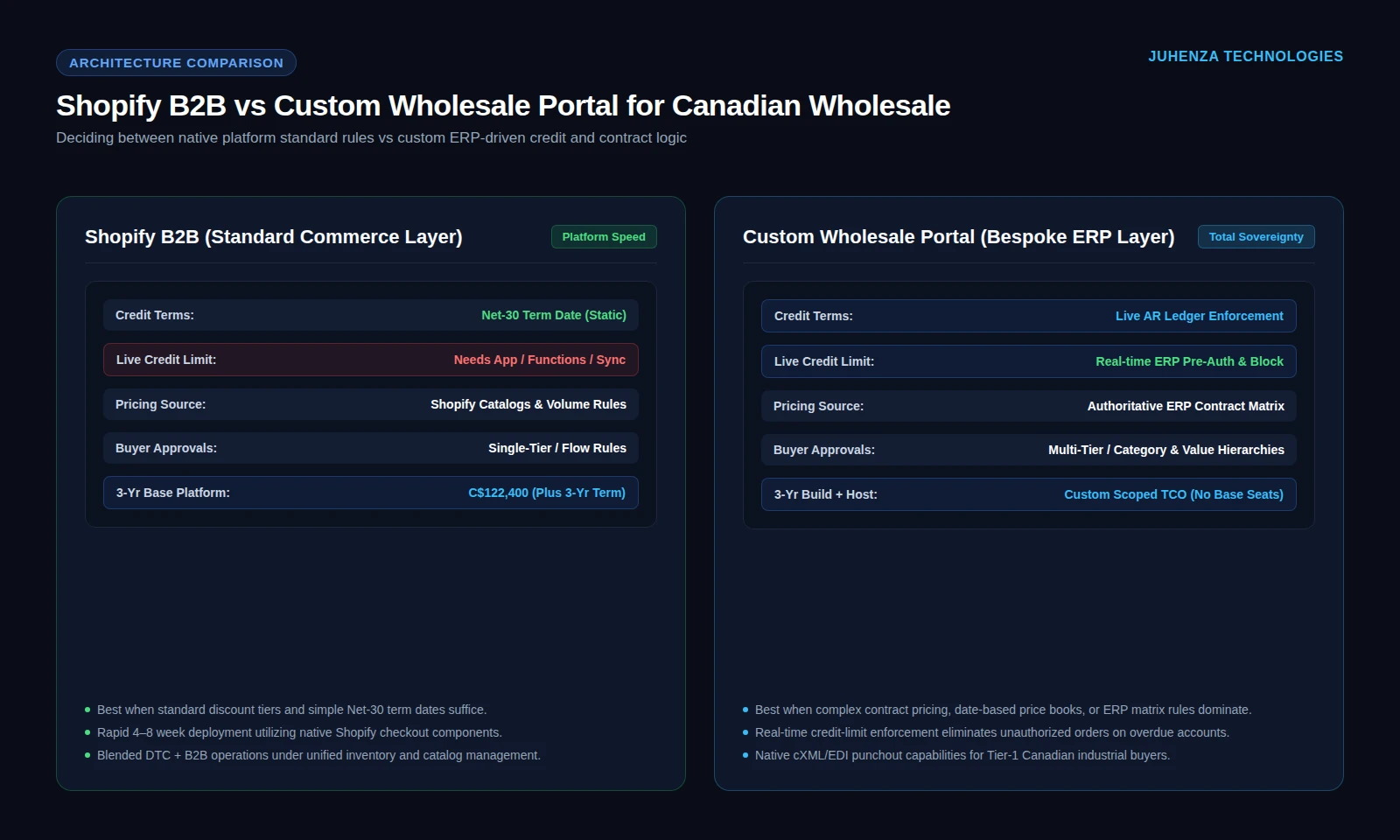 Figure 1: For Canadian distributors, the decision is who owns price and credit, not which storefront looks better.
Choosing between a Shopify B2B vs custom wholesale portal is not primarily a front-end storefront decision for a Canadian distributor. It is an operational back-office architecture decision. The buyer interacts with a product catalog and submits a purchase order (PO). Your finance and warehouse teams live with continuous contract adjustments, credit holds, overdue invoice collections, and ERP inventory reconciliation. If those workflows follow standard e-commerce patterns, Shopify provides rapid time-to-market. If your commercial agreements demand non-standard enterprise logic, building a custom portal via custom software and website development can be significantly more economical than fighting SaaS platform constraints for three years.
This guide compares both architectures across the three areas that make or break wholesale portal projects: Net-30 accounts receivable sync, tiered ERP contract pricing, and 3-year total cost of ownership (TCO) in Canadian dollars (CAD).
What each option actually is
Shopify B2B is an integrated wholesale suite embedded within the Shopify ecosystem. It allows merchants to create company profiles for commercial accounts, configure multiple buyers with distinct ordering locations, establish custom price lists via B2B catalogs, set quantity minimums or increments, and assign payment terms. Commercial buyers log into a self-service portal to review tailored pricing, reorder past SKUs, and track order fulfillment.
A custom wholesale portal is an engineered, purpose-built B2B application. It can operate on an independent tech stack (e.g., Next.js, Node.js, PostgreSQL) or run headless, utilizing commerce APIs while owning the client experience. The custom portal is built from the ground up around your exact contract logic, hierarchical approval chains, live credit checking, and bidirectional ERP data synchronization through ERP and system integration consulting.
The essential distinction is not aesthetic design polish. It is governance: on Shopify, the vendor defines the standard data model and workflow boundaries within which you configure. In a custom portal, your business defines the operational rules and the software strictly enforces them.
Net-30: term date vs live credit sync
Net-30 implies that a buyer must settle an invoice within 30 calendar days of issuance. In wholesale distribution, this involves three distinct operational layers:
- What terms does an account receive? Shopify B2B handles this natively. You assign payment terms (Net 7, 15, 30, 60, or 90) to a company location. The customer checks out without immediate credit card authorization, and Shopify generates a pending invoice with a designated due date.
- Can this account buy on credit right now? This is where off-the-shelf deployments frequently break down. A static term date does not perform a real-time check against an accounts receivable (AR) credit limit, current unpaid balances, or administrative credit holds. Shopify B2B does not natively provide an automated credit-limit field that blocks an order when an account is over limit; this enforcement requires third-party apps, Shopify Functions, or custom middleware sync.
- What happens during partial or overdue payments? Your finance team must reconcile receipts, update the general ledger, release shipping holds, and present the buyer with an accurate statement of account. If this process relies on manual spreadsheets, payment terms become a continuous source of friction.
Before choosing a platform, evaluate your operational requirement: if your accounts receivable ledger must validate available credit at checkout before releasing an order, you require a synchronized credit verification architecture. If you assign static terms and audit overdue balances manually once a week, Shopify B2B's native workflow is sufficient.
A Net-30 sync sequence that works
A dependable wholesale credit architecture follows five sequential stages:
- Authentication & Identification: The buyer authenticates. The portal identifies the parent company record and operating branch location.
- Real-Time AR Ledger Query: The system queries your ERP or financial system for real-time credit status: approved credit line, current unbilled balance, and overdue flags.
- Checkout Validation Branch: If the cart total is within available credit, Net-30 is displayed with a mandatory PO field. If the account exceeds its limit or is flagged for overdue balance, the portal automatically restricts payment to upfront credit card or electronic funds transfer (EFT).
- Order Commitment: The order posts directly into the ERP with the PO reference, locked contract pricing, and provincial tax breakdown.
- Bidirectional Ledger Sync: Invoices, payments, and credit adjustments sync continuously, ensuring the customer's portal view matches your finance team's internal AR aging report.
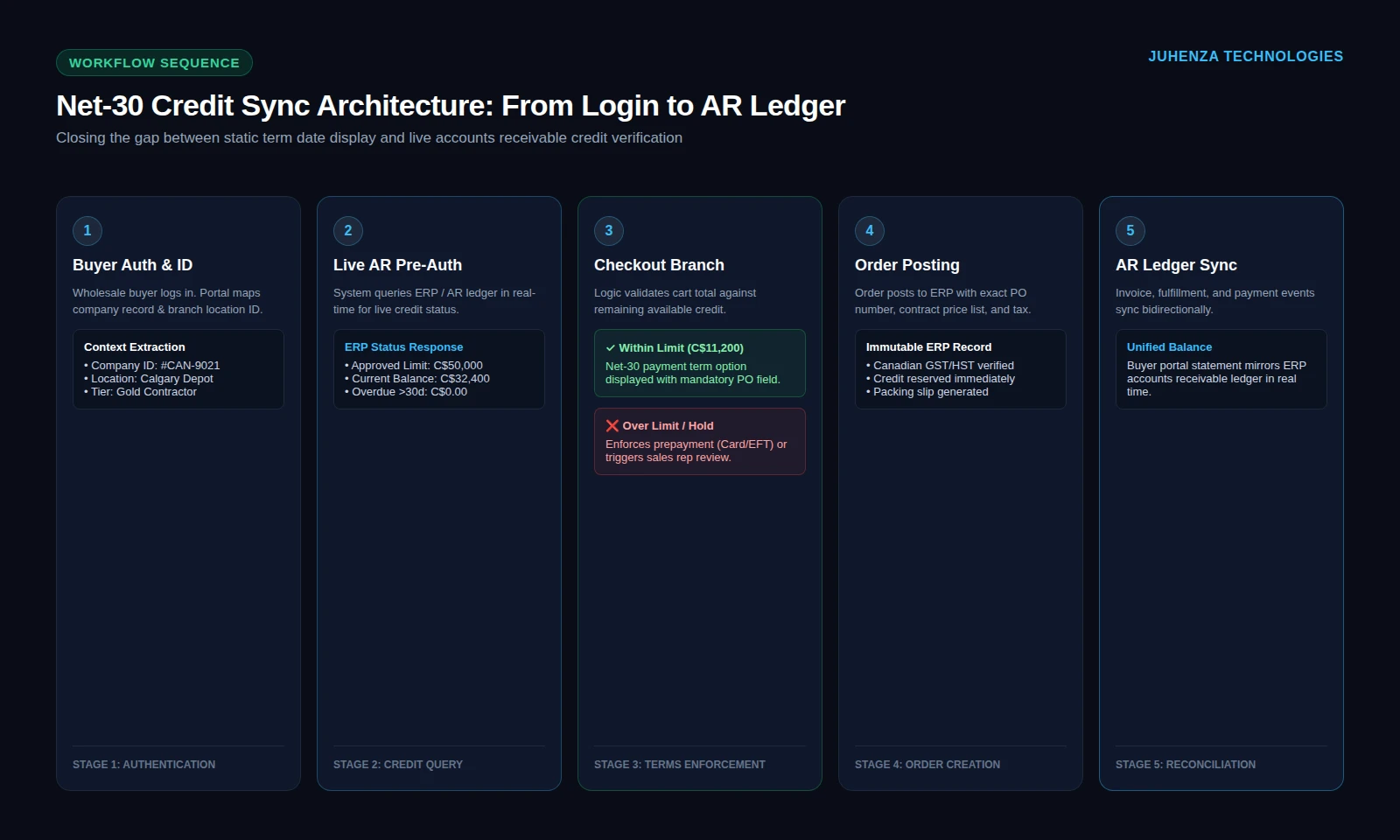 Figure 2: Net-30 credit sync sequence from buyer authentication to ERP accounts receivable reconciliation.
Tiered ERP pricing: who owns price?
Tiered pricing in wholesale distribution encompasses everything from simple customer-group percentage discounts to complex matrices combining customer tier, product group, order quantity, geographic shipping zone, and seasonal contract dates.
Shopify B2B handles standard wholesale discount structures effectively. Basic, Grow, and Advanced plans support up to 3 catalog assignments. Shopify Plus provides unlimited B2B catalogs, allowing dedicated price lists assigned per company location, alongside volume pricing rules (e.g., price breaks at 50, 100, and 500 units).
A custom portal excels when commercial pricing is dynamic rather than static. Examples include contract pricing that adjusts quarterly based on raw material commodity indices, project-specific bids, customer-specific packaging surcharges, or multi-currency pricing tied to warehouse proximity.
The critical architectural question to answer is: which system is the system of record for price?
- Shopify Catalog: If pricing is managed directly within Shopify's catalog manager, native B2B provides an immediate, low-maintenance solution.
- The ERP: If your ERP (e.g., SAP, NetSuite, Microsoft Dynamics 365, Epicor) generates and maintains master price books, Shopify acts merely as a presentation layer. You must engineer a resilient middleware pipeline to push price changes to Shopify catalogs or deploy a custom portal that queries ERP pricing on demand.
- Dual Ownership: If both systems can modify price, you risk severe billing disputes. Establish deterministic conflict rules: specify which system wins, who has override authority, and how audit logs are recorded.
ERP integration checklist
Any comprehensive wholesale integration specification must resolve eight core items:
- Price Master: Authoritative source of contract prices (ERP vs store).
- Sync Direction: Directionality of data flows (unidirectional vs bidirectional).
- Sync Cadence: Event-driven webhooks, hourly batch intervals, or manual triggers.
- Inventory Source: Master inventory tracking across multi-location warehouses.
- Customer Identity: Mapping ERP customer keys to digital company profile IDs.
- Order Routing: Transforming web orders into approved ERP sales orders.
- Failure Telemetry: Automated retry mechanisms, deduplication, and alerting.
- Daily Reconciliation: Automated end-of-day checks matching web orders against ERP bookings.
What Shopify B2B does well, and where it stops
Core Strengths
- Company Account Profiles: Native management of multi-location buyer accounts with assigned buyer roles and permissions.
- B2B Catalogs & Volume Rules: Clear management of percentage-off or fixed-price catalogs and tiered quantity increments.
- Standard Payment Terms: Out-of-the-box configuration of Net payment terms, draft order workflows, and customer reorder portals.
- Unified Commerce: Run both retail direct-to-consumer (DTC) and wholesale operations on a single Shopify store instance.
- Shopify Flow Automation: Visual workflow triggers for automated buyer onboarding, notifications, and invoicing.
Platform Limitations
- No Native Credit-Limit Enforcement: No native mechanism to halt checkout based on live accounts receivable balances.
- Third-Party ERP Connectors: No off-the-shelf ERP integration; requires partner-built connectors or bespoke API middleware.
- Restricted Approval Hierarchies: Native buyer roles provide simple ordering permissions; multi-tier approvals based on spend thresholds require custom Shopify Functions or external tooling.
- No Native eProcurement / Punchout: Lacks native cXML, OCI, or EDI punchout capabilities required by government and enterprise buyers without external apps.
- Complex Catalog Constraints: Navigating hundreds of bespoke customer price books can introduce administrative overhead.
What a custom portal does well, and where it costs
Core Strengths
- Exact Contract Pricing: Enforces bespoke multi-variable pricing algorithms directly from the ERP without data flattening.
- Live Credit Safeguards: Real-time pre-authorization checks against AR ledgers prevent shipments to delinquent accounts.
- Hierarchical Approval Workflows: Deep multi-tier approval chains mirroring buyer organizational charts (e.g., project managers submit POs, procurement directors approve orders over C$25,000).
- Native Enterprise Punchout: Purpose-built cXML and EDI endpoints that integrate directly into enterprise ERP procurement systems.
- Unlimited Customization: Dedicated sales rep portals, warehouse pickup scheduling, and PDF purchase order ingestion.
Financial and Operational Costs
- Extended Build Timeline: Custom engineering requires 10 to 20+ weeks of scoping, development, and integration testing.
- Infrastructure Ownership: Your team or development partner is responsible for cloud hosting (AWS/GCP), security patching, database optimization, and uptime SLAs.
- Direct Integration Overhead: A custom portal requires dedicated API integration with the ERP backend.
- Ongoing Feature Development: Every functional enhancement requires software engineering rather than toggling a marketplace app.
3-year CAD TCO: a worksheet, not a sticker price
Evaluating total cost of ownership (TCO) requires looking past base subscription rates. In Canada, Shopify Plus is priced at C$3,650 per month on a 1-year commitment and C$3,400 per month on a 3-year commitment. Beyond platform fees, an accurate 36-month financial model must factor in initial build costs, third-party apps, integration middleware, credit card processing fees, and ongoing maintenance.
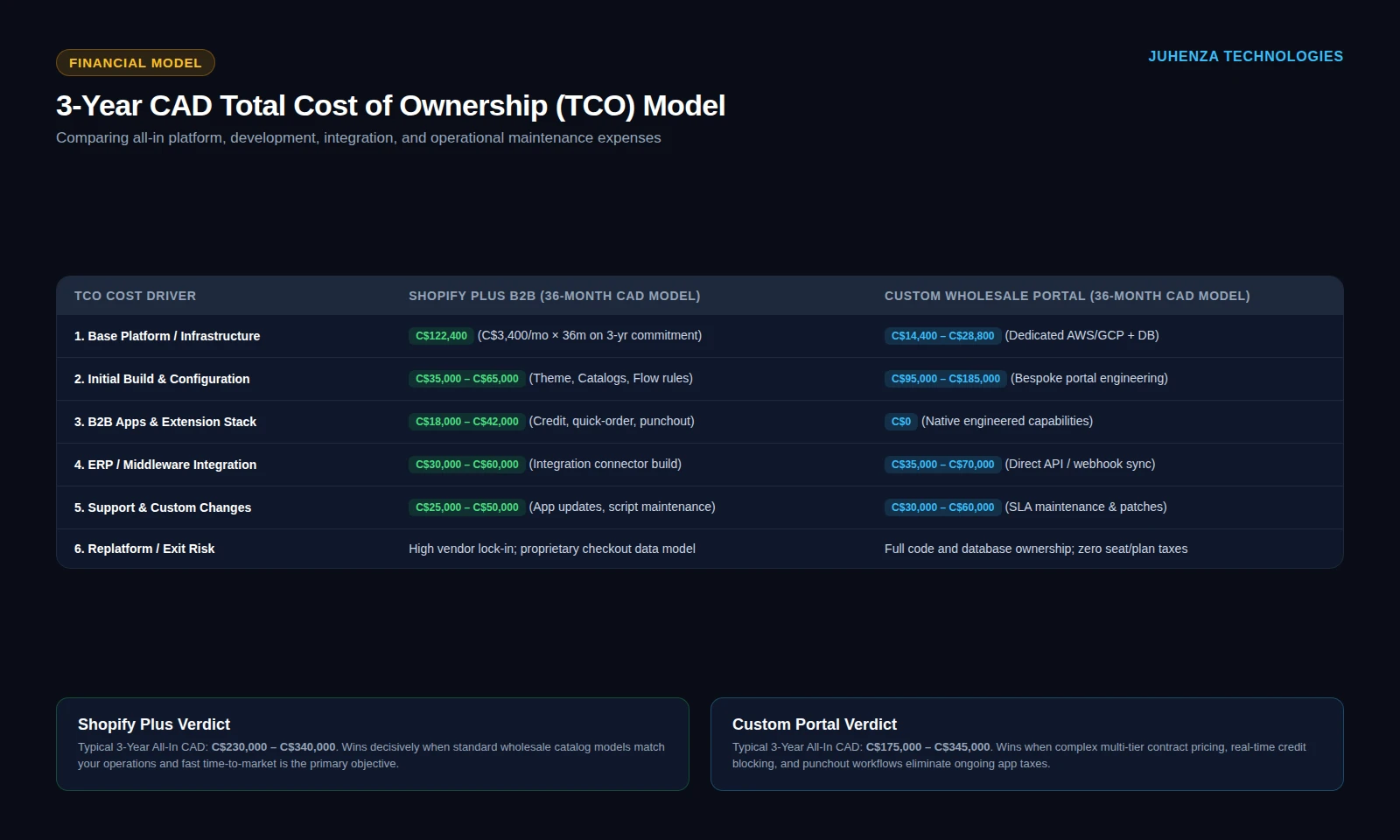 Figure 3: Comprehensive 3-year CAD TCO model comparing Shopify Plus and Custom Wholesale Portal investments.
| TCO Cost Category | Shopify Plus B2B (36-Month CAD Model) | Custom Wholesale Portal (36-Month CAD Model) |
|---|---|---|
| Base Platform & Infrastructure | C$122,400 (C$3,400/mo × 36m on 3-yr term) | C$14,400 – C$28,800 (Dedicated Cloud & Database) |
| Initial Build & Configuration | C$35,000 – C$65,000 (Theme, Catalogs, Flow) | C$95,000 – C$185,000 (Bespoke Portal Engineering) |
| B2B App & Extension Stack | C$18,000 – C$42,000 (Credit, Punchout, Quick-order) | C$0 (Native Built Capabilities) |
| ERP / Middleware Integration | C$30,000 – C$60,000 (Connector Build & Maintenance) | C$35,000 – C$70,000 (Direct API / Webhook Engine) |
| Support & Ongoing Evolution | C$25,000 – C$50,000 (App updates, script upkeep) | C$30,000 – C$60,000 (SLA Maintenance & Enhancements) |
| Estimated 3-Year Total | C$230,400 – C$339,400 | C$174,400 – C$343,800 |
How to evaluate the financial threshold: If your commercial workflows are standard and you value rapid deployment, Shopify Plus offers an established ecosystem with predictable recurring fees. However, if your business requires multiple third-party apps to patch credit limits, punchout, and tiered pricing, cumulative subscription costs and transaction fees cause Shopify Plus TCO to converge with or exceed custom engineering. A custom portal eliminates ongoing seat and revenue taxes, transforming software into a capitalized, owned asset.
Canada specifics: tax, currency, and buyer experience
Operating in the Canadian wholesale market introduces three essential technical considerations:
Canadian Sales Tax Compliance (GST / HST / PST / QST)
Under Canada Revenue Agency (CRA) guidelines, businesses exceeding C$30,000 in worldwide taxable revenue over four consecutive quarters must maintain an active GST/HST registration. Wholesale transactions follow strict place-of-supply rules based on the destination province:
- HST Provinces: Ontario (13%), New Brunswick, Newfoundland & Labrador, Nova Scotia, and Prince Edward Island (15%).
- GST + PST/RST/QST Provinces: British Columbia (5% GST + 7% PST), Saskatchewan (5% GST + 6% PST), Manitoba (5% GST + 7% RST), and Quebec (5% GST + 9.975% QST).
- GST-Only Territories/Provinces: Alberta, Northwest Territories, Nunavut, and Yukon (5% GST).
Your wholesale portal must calculate and display provincial tax liabilities dynamically at checkout based on destination shipping addresses, while maintaining tax-exempt certificate tracking for Native Status or wholesale resale certificates. (Note: This section provides general architectural guidance, not legal tax advice. Consult a certified Canadian CPA to verify registration obligations.)
Currency and Multi-Currency Separation
Always present wholesale pricing and bill in Canadian Dollars (CAD) for domestic buyers. If you service US accounts concurrently, isolate USD price books, credit limits, and banking settlement pathways. Avoid dynamic foreign exchange conversions at checkout; fluctuating exchange rates introduce accounting discrepancies into fixed purchase orders.
Bilingual Buyer Requirements
For suppliers distributing into Quebec, New Brunswick, or federally regulated procurement channels, French-language compliance requires fully localized product taxonomies, dynamic PDF spec sheets, and bilingual invoice generation at checkout.
Decision framework: score it in one meeting
Use this 7-point decision matrix to evaluate your operational requirements. Score each requirement: 0 = Not needed, 1 = Nice to have, 2 = Mandatory requirement. Sum the score in the "Custom Portal Wins" column.
| Operational Dimension | Shopify B2B Wins If... | Custom Portal Wins If... |
|---|---|---|
| 1. Catalog Scale | ≤3 catalogs (Standard) or moderate Plus catalogs | Hundreds of dynamic, per-branch contract catalogs |
| 2. Pricing Logic | Standard percentage discounts & volume breaks | Complex ERP contract matrices, commodity/date breaks |
| 3. Credit Enforcement | Static Net-30 term date; manual AR reviews | Live ERP credit-limit pre-auth; auto-block on overdue |
| 4. Approval Hierarchy | Single-tier buyer checkout permissions | Multi-tier, dollar-threshold & category approvals |
| 5. ERP Integration | Scheduled batch imports / one-way sync | Real-time bidirectional event sync with conflict rules |
| 6. Procurement Punchout | No punchout needed, or basic partner app | Mandatory cXML/OCI/EDI punchout for enterprise buyers |
| 7. Canadian Localization | Standard English checkout + single currency | Strict bilingual (EN/FR) taxonomies & complex PST/QST |
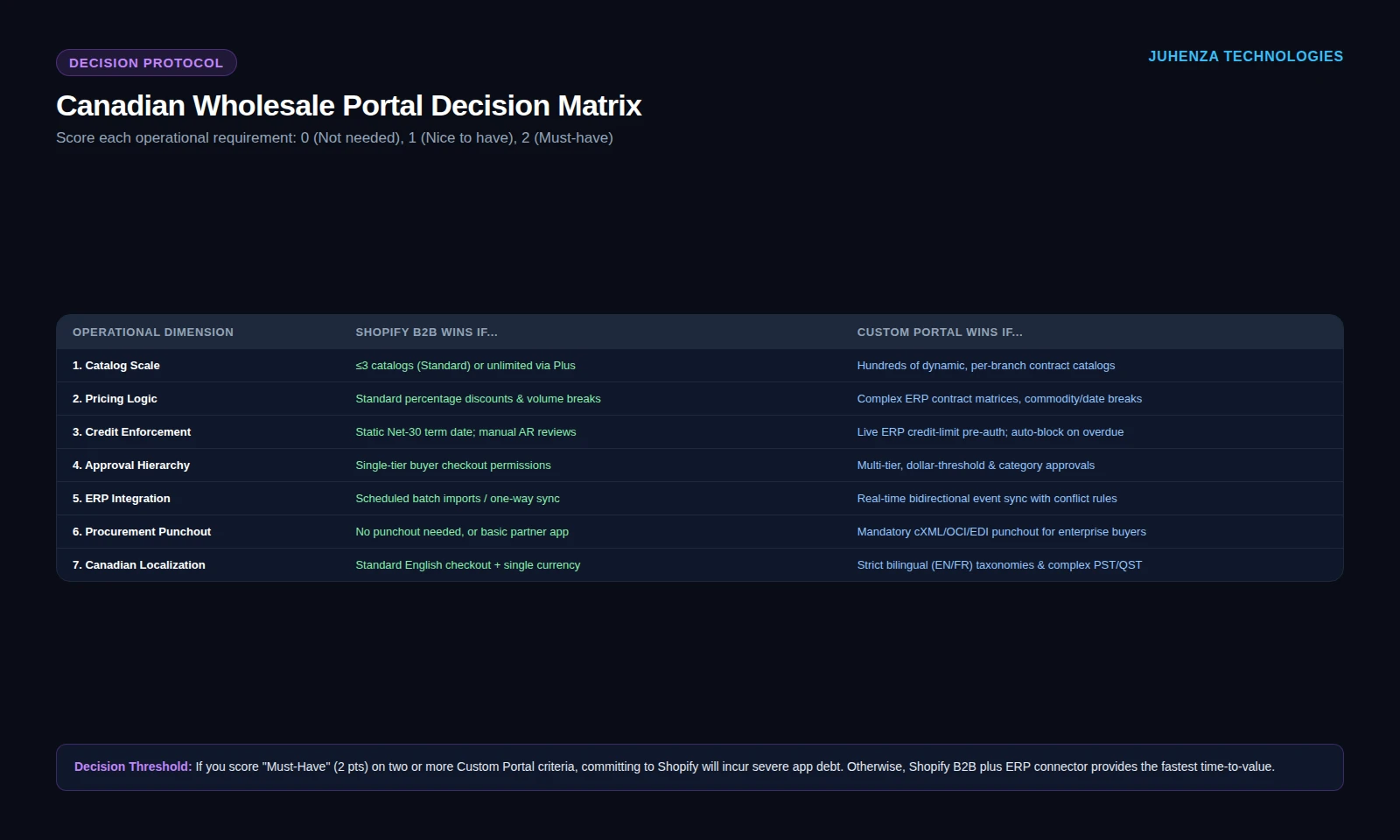 Figure 4: Score each operational dimension to determine the ideal platform architecture.
The Decision Rule: If you score 2 points (Mandatory) on two or more Custom Portal criteria, committing to Shopify will incur significant app friction and developer workarounds. In that scenario, commission a scoped custom portal build. If you score 2 on zero or one criterion, begin with Shopify B2B and invest in a clean ERP connector for catalog and order sync.
Common mistakes, limitations, and when to get help
Common Mistakes to Avoid
- Treating Net-30 as a checkout checkbox: Net-30 is an accounts receivable risk workflow. Design the credit authorization, invoice due date, and payment reconciliation stages simultaneously.
- Permitting dual price ownership: Never allow both Shopify and your ERP to modify prices independently. Select one master system of record.
- Evaluating base subscription fees instead of 3-year TCO: Always calculate the 36-month all-in cost including third-party apps, developer maintenance, integration middleware, and payment processing.
- Neglecting buyer approval workflows: Review procurement processes with your top five wholesale buyers. If their internal rules demand multi-tier approvals, test whether your platform can model them before launch.
- Ignoring Canadian place-of-supply rules: Ensure sales tax engines accurately assess combined GST/PST/QST rates across destination provinces.
Limitations
This analysis reflects published capabilities as of 2026. Shopify continuously updates native B2B features, APIs, and pricing models. Consult official Shopify B2B documentation and the Shopify Plus plan directory for the latest platform specifications.
(JUHENZA Practitioner Note: In B2B wholesale engagements interfacing with mid-market ERPs such as NetSuite or Microsoft Dynamics 365, the friction point is almost never the front-end product catalog. It is accounts receivable latency. When credit limits are enforced through asynchronous nightly syncs rather than real-time pre-auth checks at checkout, distributors frequently process unauthorized orders for overdue accounts during end-of-month volume surges. Designing an authoritative single-system credit verification sequence upfront prevents six-figure bad debt exposure.)
Frequently Asked Questions
Does Shopify B2B support Net-30 payment terms for Canadian distributors?
Yes. Shopify B2B natively supports Net payment terms, including Net 7, 15, 30, 60, and 90 days. Terms are assigned at the company location level. When authorized buyers check out, orders are confirmed without upfront payment, and an invoice is generated with an explicit due date. However, automatic credit-limit enforcement requires custom Functions or ERP middleware.
Does Shopify B2B natively enforce customer credit limits?
No. Shopify B2B does not provide an automated credit-limit enforcement engine that halts checkout when a customer's outstanding balance exceeds their approved credit line. Distributors requiring real-time credit enforcement must integrate an external credit app, write custom Shopify Functions, or implement a custom wholesale portal linked to their ERP.
Can Shopify B2B synchronize contract pricing from our ERP?
Yes. Price lists can be synchronized from ERP systems like NetSuite, SAP Business One, Microsoft Dynamics 365, or Epicor to Shopify B2B catalogs via REST or GraphQL APIs. The key requirement is establishing your ERP as the master source of truth and automating scheduled batch updates or webhook triggers.
Do Canadian merchants require Shopify Plus to access B2B functionality?
Core B2B functionality is included across all paid Shopify plans (Basic, Grow, Advanced, and Plus). However, Basic, Grow, and Advanced plans limit merchants to a maximum of 3 catalog assignments. Shopify Plus is required for unlimited B2B catalogs, dedicated company price lists, deposit management, and checkout extensibility.
How much does Shopify Plus cost in Canadian Dollars?
Shopify Plus is listed in Canada at approximately C$3,650 per month on a 1-year agreement and C$3,400 per month on a 3-year agreement. Merchants must factor in third-party app subscriptions, integration middleware, and payment processing fees to establish a complete 3-year TCO.
When does investing in a custom wholesale portal pay off?
A custom wholesale portal delivers strong ROI when non-standard pricing algorithms, live accounts receivable credit validation, multi-tier procurement approvals, or mandatory EDI/cXML punchout requirements govern your operations. If adapting your workflows to a SaaS platform requires complex workarounds and ongoing app fees, custom engineering is often more economical over three years.
Can a distributor start on Shopify B2B and migrate to a custom portal later?
Yes. Maintain your ERP as the master database for products, pricing, and accounts receivable data from day one. If Shopify functions strictly as a presentation layer, migrating to an owned custom portal in the future remains a front-end project rather than an operational database overhaul.
Where this fits
This guide sits within JUHENZA's E-commerce & Retail architecture practice. If you are evaluating digital selling channels for regional trade, review our channel-choice guide for Bhavnagar shops for insights on aligning business capacity with commerce channels.
If you are evaluating wholesale commerce platforms for your Canadian distribution business, send your ERP specifications, catalog complexity, and credit workflows to Discuss your project. Our integration architects will deliver a transparent technical analysis and a scoped 3-year TCO comparison.