
Direct answer: For a UK retailer turning over £3m–£10m online, a headless Next.js commerce build typically costs £35,000–£120,000 upfront and £2,000–£8,000 per month to operate, depending on ERP integration, market count and who maintains it. Over three years, the all-in figure is usually £110,000–£400,000—more than a well-built Shopify Plus theme, but potentially justifiable if mobile speed or a custom buying journey is the commercial constraint.
Most UK retailers evaluating headless Next.js commerce are given three numbers by three agencies: £40,000, £90,000 and £250,000. All three can be technically correct, because none of them is a total cost of ownership. They are initial build estimates based on differing assumptions about ERP integration depth, content operations, cloud hosting, quarterly API version upgrades and who carries the pager after launch.
This guide replaces the vague headline range with an actionable financial model. It provides a three-year TCO breakdown you can adapt for your board, an ERP sync checklist that exposes the integration work most agency proposals understate, and a weighted agency scoring matrix that turns subjective pitch chemistry into a defensible shortlist.
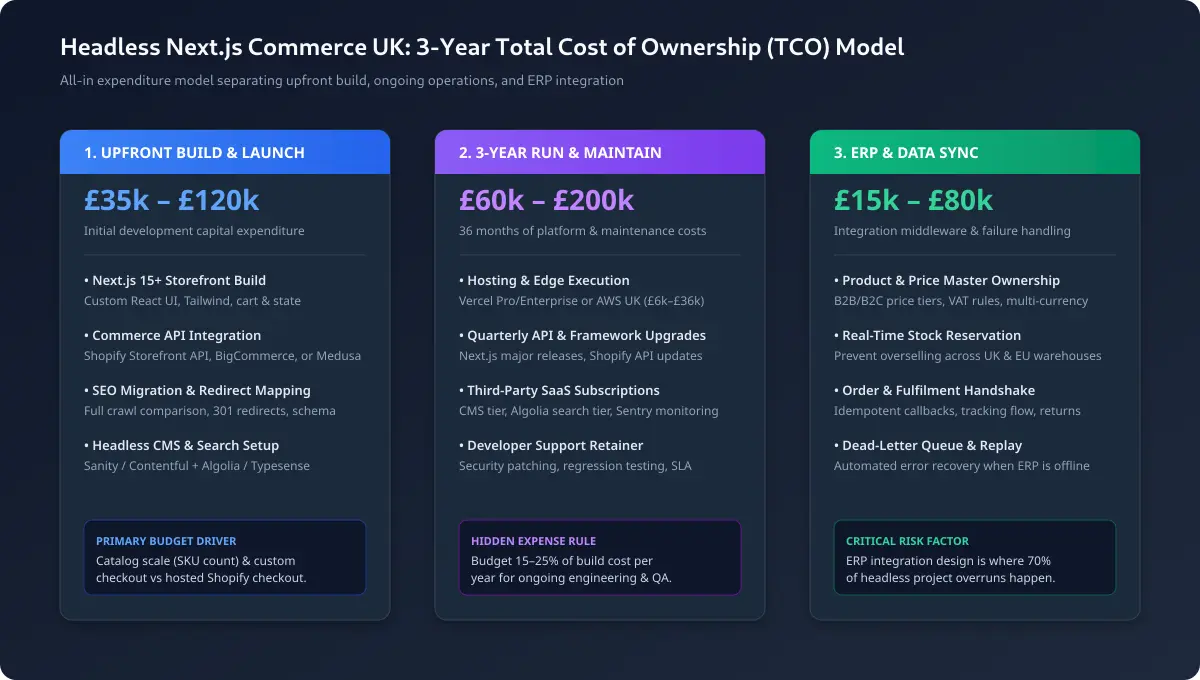 Figure 1: A 3-year TCO model should separate upfront build, ongoing cloud operations, and ERP integration middleware.
What headless Next.js commerce actually costs in the UK
Headless commerce means the customer-facing storefront is engineered and hosted independently from the commerce backend—catalogue, cart, checkout, orders and payments—with the two communicating through APIs. In a Next.js commerce architecture, the storefront is a React application utilizing React Server Components and edge rendering, typically connected to Shopify Plus, BigCommerce, Medusa or a custom commerce engine.
The honest cost equation has two distinct layers: build cost and running cost. Most agency quotes emphasize the first and underweight the second. Through JUHENZA's Next.js delivery approach, we recommend modeling both upfront capital expenditure and ongoing operational overhead before issuing an RFP.
Build and launch costs
For UK retail projects, published agency estimates cluster into three distinct scope bands:
| Scope band | Typical build range (GBP, excl. VAT) | Primary scope drivers |
|---|---|---|
| Lean headless storefront on existing backend | £15,000–£40,000 | Small catalogue, single UK market, hosted checkout, minimal ERP integration, native platform search |
| Mid-market headless with ERP & PIM integration | £40,000–£100,000 | 5,000–50,000 SKUs, one or two ERP connectors, custom Algolia/Typesense filtering, redirect mapping |
| Complex multi-market or multi-storefront build | £100,000–£250,000+ | Multiple currencies, VAT regimes, multiple warehouses, B2B price tiers, custom checkout, dedicated DevOps |
These ranges reflect genuine architectural differences. A £35,000 storefront that connects directly to Shopify's Storefront API and utilizes standard hosted checkout is an entirely different product from a £150,000 enterprise platform integrating SAP Business One, an Akeneo PIM, Algolia search and three localized European storefronts. The error lies in comparing top-line totals without normalizing the underlying workstreams.
Year 1–3 operating costs
This is where the true total cost of ownership diverges from an initial agency quote. A headless storefront is a running software application, not a static theme file. The recurring operational lines include:
| Cost line | Typical UK monthly range | Operational considerations |
|---|---|---|
| Hosting and edge functions | £50–£2,000+ | Vercel Pro/Enterprise or AWS UK infrastructure; scales with traffic, bandwidth and serverless function invocations |
| Commerce backend subscription | £25–£2,300+ | Shopify Basic through Shopify Plus; custom backends trade license fees for cloud infrastructure and maintenance |
| Headless CMS | £0–£1,000+ | Sanity, Contentful, or Storyblok; frequently omitted from initial agency estimates |
| Search and merchandising | £0–£2,000+ | Algolia, Typesense, or Coveo; product discovery query volume is often a major cost multiplier |
| Monitoring and observability | £50–£500 | Datadog, Sentry, and Logtail for error alerting, uptime monitoring, and Core Web Vitals telemetry |
| Developer maintenance & SLAs | £1,000–£6,000+ | Framework version jumps, quarterly API updates, dependency patches, and security hotfixes |
| Content and merchandising operations | Internal team or retainer | Operational capacity required to manage landing pages, promotional banners, and campaign metadata |
A dependable rule of thumb for mid-market retailers: budget 15–25% of the initial build cost per year for ongoing engineering, platform subscriptions and regression QA. A £60,000 build carries roughly £9,000–£15,000 annually in technical run costs before factoring in marketing, content creation and merchant payment processing fees.
The line items most UK quotes miss
Six substantial expenses appear routinely during post-launch operations but are rarely highlighted in initial agency proposals:
- Quarterly API version upgrades: Both Shopify's Storefront API and Next.js follow regular release cadences with breaking deprecation windows. Regression testing and deploying upgrades require dedicated developer hours.
- SEO migration and 301 redirect management: A replatform without a comprehensive 1:1 redirect map, crawl differential testing, and schema validation risks severe drops in organic search revenue.
- Payment callback and refund reconciliation: Whether utilizing hosted checkout or custom payment gateways, declined card callbacks, webhook retries, and automated refund paths require extensive edge-case testing.
- Performance and accessibility regression audits: Storefront speed often deteriorates three to six months post-launch as marketing teams add third-party tracking scripts, chat widgets, and campaign assets.
- Content model design and editorial workflows: If internal merchandisers cannot publish promotional changes without engineering intervention, operating costs shift directly onto technical retainers.
- Code repository and infrastructure ownership: Git repositories, cloud hosting accounts, domain registrations, and third-party SaaS contracts must be owned directly by the retailer from day one.
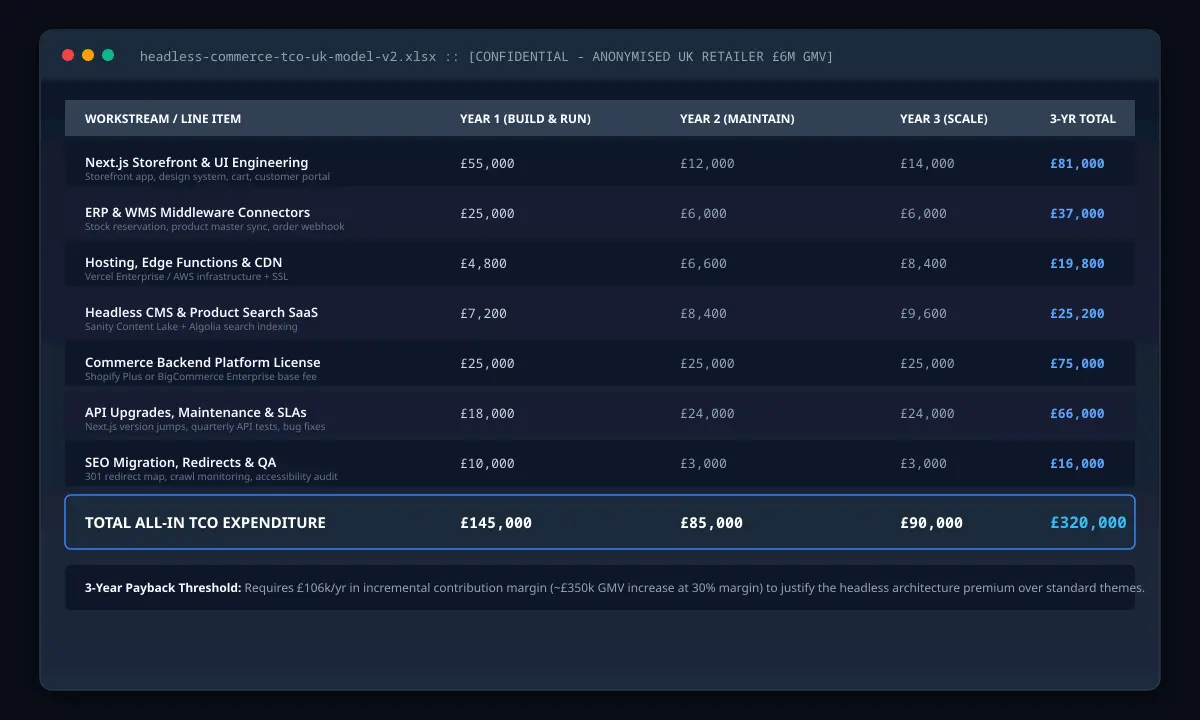 Figure 2: Anonymized line-item TCO spreadsheet modeling 3-year build and operating expenditure for a mid-market UK retailer.
The UK-specific costs that change the maths
VAT, delivery promises and returns
UK consumer protection regulations and HMRC VAT guidelines heavily impact storefront and checkout workflows. Prices presented to consumers must be VAT-inclusive, delivery timeframes and carriage charges must be explicitly stated prior to payment, and consumer contracts regulations grant statutory cancellation rights for distance selling.
A headless build must clearly establish architectural ownership:
- Where is VAT calculated and validated?
- Which system acts as the merchant of record?
- How are carrier-calculated delivery cutoffs (e.g., Royal Mail Tracked 24/48, DPD Next Day) retrieved and rendered on product detail pages?
- How are customer returns initiated, tracked, and credited?
When these specifications are deferred to a post-launch "phase two", the resulting refactoring cost is typically double the original estimate because it simultaneously touches the Next.js frontend, the commerce API, the ERP, and customer account portals.
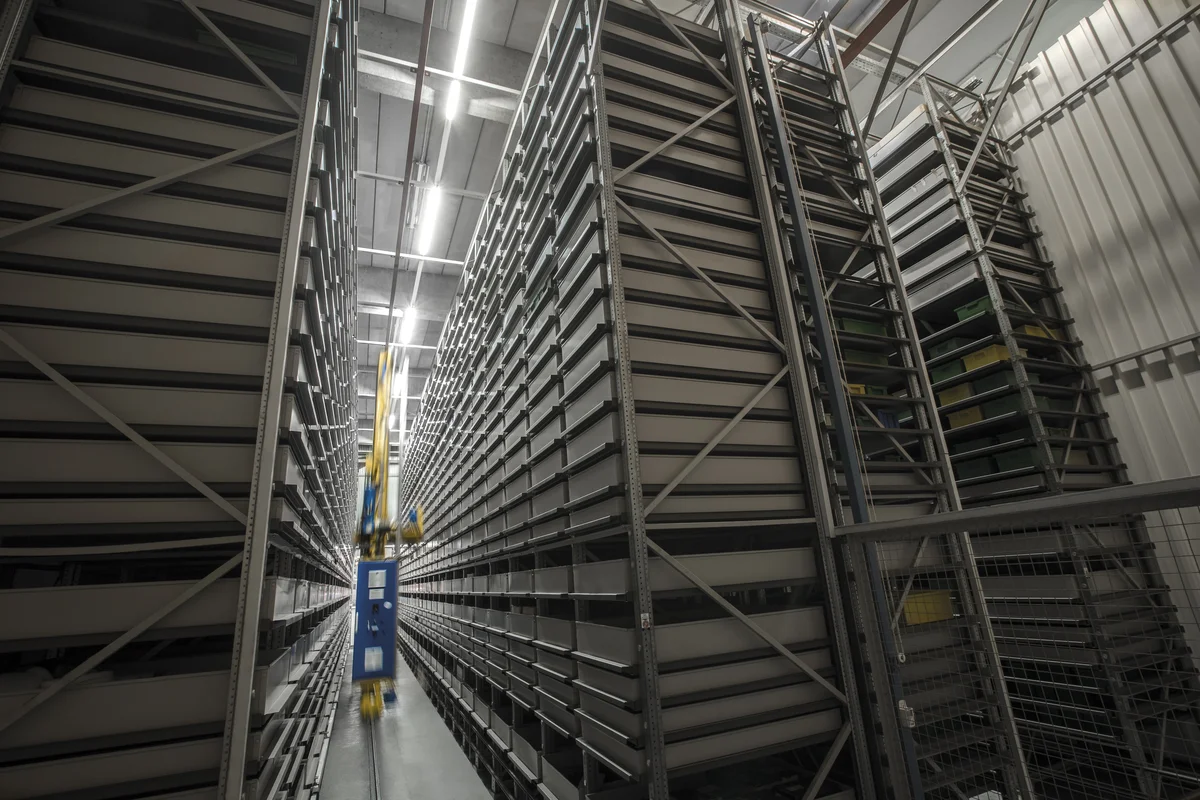 Figure 3: ERP data synchronization directly controls warehouse fulfillment cutoffs, stock reservation, and courier tracking updates.
Hosting, edge execution and API versions
Deploying Next.js on Vercel is standard across UK digital agencies because it enables rapid preview deployments and fast mobile performance across UK edge nodes. However, Vercel pricing tiers scale with bandwidth and serverless function executions. A mid-market retailer running high-frequency flash sales or scraping bots can unexpectedly graduate from entry-level plans to high-tier Enterprise commitments.
Self-hosting Next.js on AWS (London eu-west-2) or European cloud infrastructure provides greater control over infrastructure expenditure and strict data residency, but introduces internal DevOps operational responsibilities. The optimal choice depends on traffic spikes, in-house technical maturity, and caching requirements.
ERP sync checklist for headless Next.js commerce
Enterprise Resource Planning (ERP) synchronization is where headless commerce projects encounter their highest risk of budget overrun. The frontend user interface is visible and easily critiqued; the middleware data sync is invisible until orders fail or stock discrepancies occur. Use this checklist during technical discovery before committing to a delivery contract.
Before build: data ownership and field mapping
| Checklist item | Architectural requirement | Operational risk if neglected |
|---|---|---|
| Product master ownership | Name the authoritative system of record for product titles, descriptions, dimensions, weight, and media assets | Dual ownership leads to conflicting, stale, or overwritten product copy on live storefronts |
| Price ownership | Define whether ERP, PIM, or commerce backend owns base prices, sale discounts, and B2B customer price books | Conflicting calculation logic produces checkout price mismatches and finance reconciliation errors |
| Stock reservation | Establish which system holds inventory reservations during active cart checkout, partial shipments, and returns | Overselling fast-moving items during peak trading hours due to asynchronous sync lag |
| Tax calculation | Clarify where domestic UK VAT and international cross-border duty rules are executed | Inaccurate checkout tax calculations causing accounting liabilities |
| Customer data ownership | Define whether ERP, CRM, or commerce platform owns customer profiles and marketing consent flags | Duplicate customer records, fragmented purchase histories, and GDPR consent compliance breaches |
| Order lifecycle states | Agree upon canonical state transitions (Pending, Paid, Acknowledged, Fulfilled, Returned, Cancelled) | Headless UI displays incorrect order status while warehouse fulfillment is already underway |
| Returns & refunds | Map return merchandise authorization (RMA) flows and payment refund triggers | Customer returns acknowledged at the warehouse without automated payment gateway refunding |
Sync patterns and failure handling
The table below delineates non-negotiable requirements (must be operational prior to public launch), recommendations (should be implemented for stability), and optional best practices (valuable for high-scale operations).
| Integration domain | Statutory / launch requirement | Recommended practice | Optional enterprise practice |
|---|---|---|---|
| Product data | Complete catalogue ingestion with unique immutable SKU identifiers | Incremental delta sync for frequent price and stock updates | Real-time webhook-driven sync with strict schema validation |
| Inventory | Near-real-time stock checks at cart entry and checkout initiation | Automated safety buffer stock rules on high-velocity SKUs | Real-time multi-warehouse geolocation stock display |
| Order ingestion | Order creation verified in commerce backend before warehouse dispatch trigger | Idempotency keys on all order creation webhooks to prevent duplicate charges | Automated financial reconciliation reports flagging failed drops |
| Fulfilment | Carrier tracking numbers transmitted to customer account portals and notification emails | Support for split-shipment consignments across multiple packages | Real-time carrier API rate negotiation directly in checkout |
| Returns | Digital return requests automatically generate corresponding ERP RMA records | Refund status dynamically visible in the customer self-service portal | Automated barcode scanning at depot triggering instant refund release |
| Failure handling | Failed sync webhooks logged with alerting and manual operator replay capability | Dead-letter queue (DLQ) with automated exponential backoff retries | Automated circuit-breaking middleware with failover logging |
| Monitoring | Sync lag duration and API error rates visible on internal operational dashboards | Business-hours Slack/Teams alerting on sync queue backlog | 24/7 automated PagerDuty escalation based on throughput anomalies |
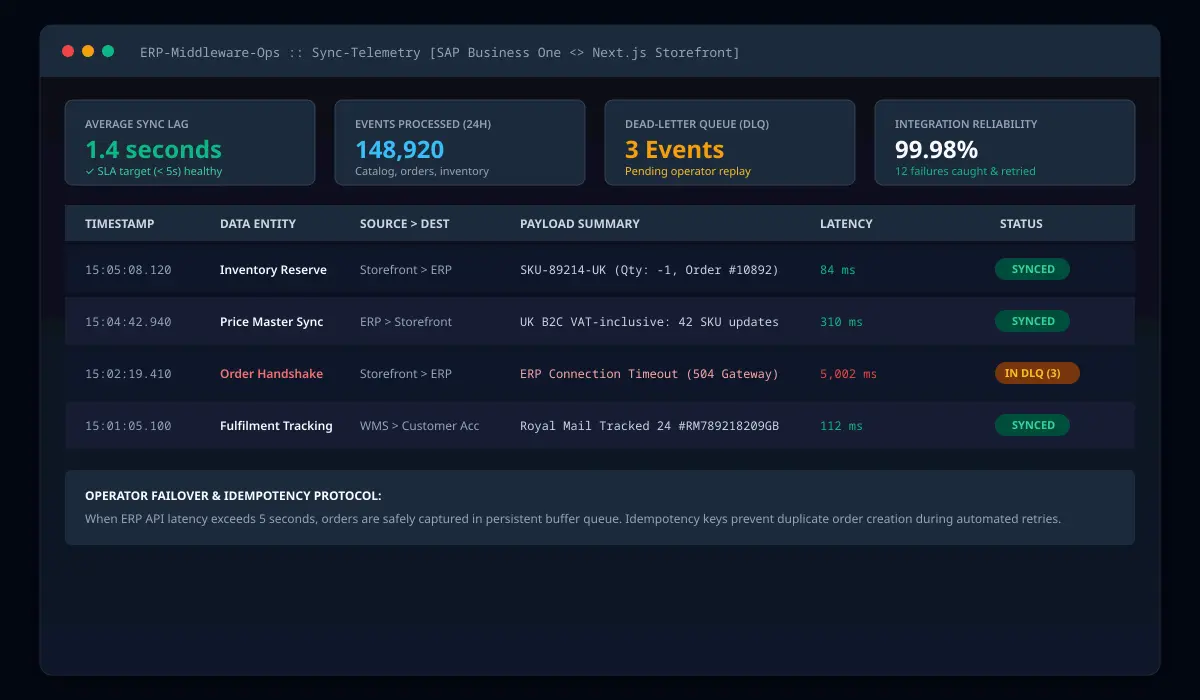 Figure 4: Integration monitoring dashboard displaying real-time sync latency, event throughput, and dead-letter queue recovery.
The fundamental priority within this checklist is failure handling. An integration that performs flawlessly 99% of the time still generates severe operational chaos during the 1% failure window unless an automated dead-letter queue and operator playbook exist.
Agency vetting matrix: score, don’t shortlist on vibes
Most agency selection processes rely on polished sales decks and informal reference calls. That is not an auditable selection strategy. The matrix below assigns weighted scores to objective technical capabilities:
| Evaluation criterion | Weight | What a top-tier answer looks like (Score 5/5) | Minimum acceptable score |
|---|---|---|---|
| Live headless references (Last 24 mos) | 20% | Public production URLs with live cart, checkout, and account portals; client engineering references available | 4 / 5 |
| Next.js & commerce API depth | 15% | Detailed explanation of React Server Components, edge caching, ISR, and quarterly API upgrade protocols | 4 / 5 |
| ERP & integration architecture | 15% | Demonstrates rigorous data ownership matrices, webhook idempotency, and operator recovery runbooks | 4 / 5 |
| 3-year TCO transparency | 15% | Delivers an itemized multi-year operating budget rather than a single upfront build quotation | 4 / 5 |
| Core Web Vitals commitments | 10% | Contractual commitments for mobile LCP (<2.5s), INP (<200ms), and CLS (<0.1) under live load | 3 / 5 |
| SEO migration methodology | 10% | Comprehensive pre-launch crawl comparison, 1:1 redirect maps, and structured data validation | 4 / 5 |
| IP, repository & cloud ownership | 10% | Explicit contract terms transferring full git repo, cloud infrastructure, and domain control upon handover | 5 / 5 |
| Commercial terms & continuity | 5% | Dedicated named engineers, transparent change request procedures, and clear discovery off-ramps | 3 / 5 |
Scoring formula: Score each agency from 1 to 5 per criterion, multiply by the weight percentage, and normalize to a 100-point total.
- Score below 65: High risk; disqualify from the tender.
- Score 65–79: Viable only with strict contractual oversight, third-party code review, and milestone-based sign-offs.
- Score 80+: Qualified to proceed to a paid technical discovery phase.
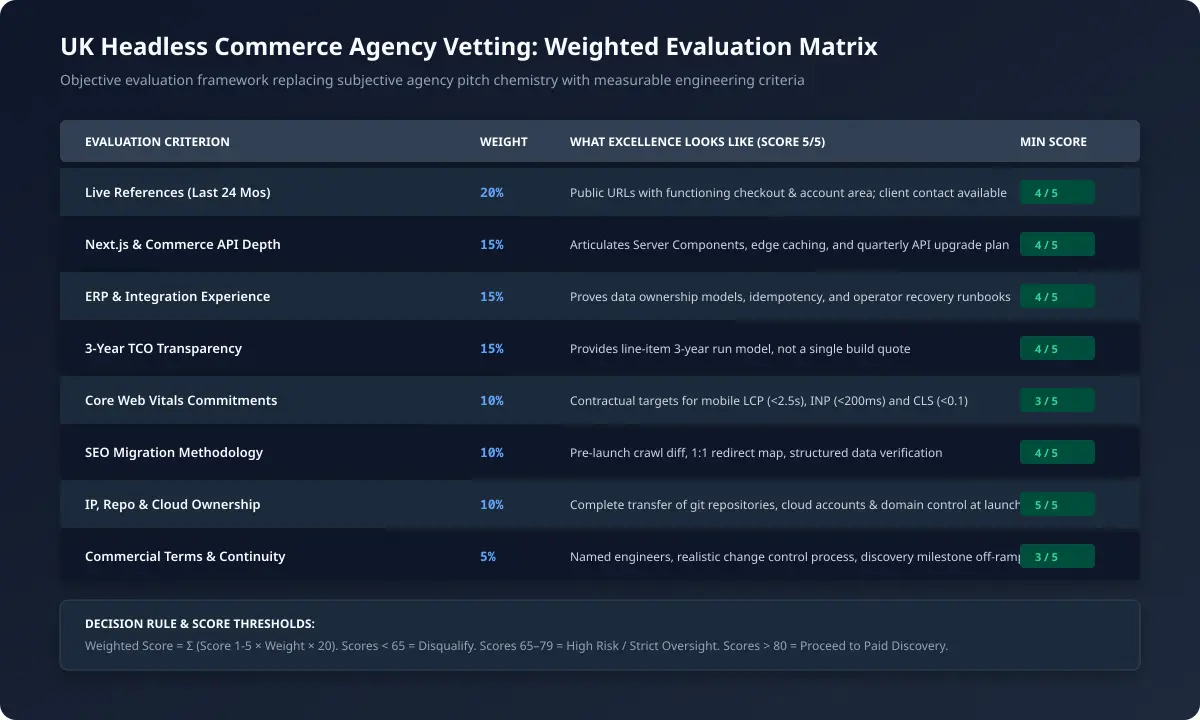 Figure 5: Weighted agency vetting matrix providing an objective scoring formula for retail procurement teams.
When headless Next.js is the wrong answer
Headless commerce is not a badge of engineering maturity. It is an architectural trade-off that introduces operational complexity. It is generally the incorrect choice when:
- Annual online revenue is below £2m–£3m: The current platform theme is rarely the primary constraint on business growth.
- No internal engineering capability exists: Operating without a technical lead or an ongoing agency maintenance budget leaves headless systems vulnerable to framework obsolescence.
- Launch speed is paramount (<12 weeks): Developing a custom frontend, headless CMS schemas, and ERP middleware takes longer than configuring an optimized commercial theme.
- Commercial constraints are commercial, not technical: The store's primary growth barriers lie in product merchandising, brand positioning, creative assets, or paid customer acquisition.
- Standard checkout converts effectively: If customers complete the existing cart and checkout without errors, building custom frontend state provides minimal commercial upside.
A disciplined Shopify Plus theme implementation paired with rigorous asset optimization and clean product architecture will routinely outperform a poorly engineered headless storefront. Shopify's own official technical documentation explicitly highlights that a headless storefront costs more to develop and operate than a theme. Moving headless requires a clear commercial business case, not an architectural preference.
An illustrative £6m retailer model
Financial modeling note: The figures below represent planning assumptions for an illustrative UK multichannel retailer generating £6m in annual online GMV, with 12,000 SKUs, one ERP system, one UK distribution center, and two target currencies (GBP and EUR). These numbers are designed to illustrate decision trade-offs rather than represent a formal quotation.
| 3-year cost line item | Optimized Shopify Plus theme | Headless Next.js + Shopify Plus backend | Variance (Headless premium) |
|---|---|---|---|
| Initial build & integration | £45,000 | £90,000 | +£45,000 |
| Commerce platform license (3 yrs) | £75,000 | £75,000 | £0 |
| Hosting, CDN & edge execution | Included in platform | £18,000 | +£18,000 |
| App ecosystem vs. Headless SaaS | £60,000 | £36,000 | -£24,000 |
| ERP middleware & data sync | £10,000 | £30,000 | +£20,000 |
| Ongoing maintenance & upgrades | £30,000 | £90,000 | +£60,000 |
| SEO migration, redirects & QA | £8,000 | £15,000 | +£7,000 |
| Estimated 3-Year Total Cost | ~£228,000 | ~£354,000 | +£126,000 |
The payback calculation
The commercial evaluation centers on a single financial question: Does the headless storefront produce at least £126,000 in incremental contribution margin over three years?
At an assumed 30% contribution margin, recouping £126,000 requires generating approximately £420,000 in incremental top-line revenue over three years. On a £6m annual baseline (£18m over three years), this translates to an average revenue uplift of approximately 2.3% per year.
If mobile conversion is verifiably constrained by theme performance, or if a tailored product configurator can lift average order value by 5%, the headless investment represents a sound commercial decision. If that uplift cannot be justified by data, the headless premium represents unrecovered overhead.
Field experience note: real-world Next.js commerce trade-offs
In production implementations across modern web frameworks, the most significant performance advantage of Next.js stems from granular rendering control: utilizing React Server Components for heavy catalog hierarchies while reserving client-side hydration strictly for interactive elements like mini-carts and variant selectors.
During technical reviews of mid-market ecommerce architectures, we frequently observe two recurrent engineering stumbling blocks:
- Over-fetching at the edge: Querying full product graphs on every page request rather than caching static product data via Incremental Static Regeneration (ISR) or tagged cache invalidation. This causes unnecessary latency spikes and increases API consumption costs.
- Brittle webhook handshakes: Relying on simple HTTP endpoints to receive inventory updates without a durable message queue (such as SQS or Redis Streams). When the ERP system undergoes routine nighttime maintenance, unbuffered webhooks drop, leaving stock figures misaligned by morning.
Addressing these issues during the initial architectural phase prevents costly emergency refactoring after launch.
Common mistakes and when to involve a specialist
Common strategic mistakes
- Comparing proposals solely on initial build price: A £40,000 bid and a £120,000 proposal frequently describe completely different architectural scopes. Normalize workstreams before comparing numbers.
- Treating ERP integration as a simple secondary task: Data ownership, reconciliation, and exception logging dictate project success far more than frontend visual styling.
- Omitting API lifecycle maintenance from annual budgets: Next.js and commerce backends update continuously. Retainers must accommodate regular version upgrades and regression testing.
- Shortlisting agencies based on visual portfolio design: Visual aesthetics do not demonstrate reliable backend synchronization or fault-tolerant order ingestion.
- Proceeding without a clear financial payback model: A transition to headless must be justified by measurable conversion uplift or operational cost reductions, not architectural trends.
When to involve specialized external engineering
Retailers should seek expert technical guidance when:
- The existing ERP lacks modern REST or GraphQL APIs and requires custom middleware connectors.
- Complex B2B pricing tiers, custom discounting rules, or multi-currency VAT regimes must be reconciled across regional markets.
- In-house technical teams require architectural discovery before committing capital to a full replatforming build.
Our ecommerce development services and frontend engineering practice are built around these precise boundaries. We also offer clear pricing models that separate exploratory technical discovery from fixed-scope development, ensuring critical integration variables are resolved before build contracts are executed.
FAQ
How much does headless Next.js commerce cost in the UK?
For a mid-market UK retailer, build costs typically fall between £35,000 and £120,000, with three-year all-in costs ranging between £110,000 and £400,000 depending on ERP complexity, market count, and maintenance arrangements. Lean builds on existing platforms sit at the lower end, while multi-market deployments with custom checkout integrations occupy the upper tier.
Is headless commerce cheaper than Shopify Plus over three years?
Usually not. A standard Shopify Plus theme implementation is generally cheaper to develop and maintain over a three-year horizon. The headless premium is commercially justified when theme constraints restrict conversion, when complex multi-brand storefronts require unified backend management, or when custom digital experiences directly drive revenue uplift.
What ERP data must sync with a headless storefront?
At minimum: master product data, SKU variants, real-time stock levels, pricing tiers, order status, courier tracking information, and customer returns. Defining the authoritative system of record for each individual data attribute is critical to preventing synchronization conflicts.
How do I select a reliable headless commerce agency?
Utilize a weighted evaluation matrix rather than relying on informal pitch presentations. Score candidate agencies on verified headless production references from the last 24 months, Next.js technical expertise, ERP integration experience, TCO transparency, Core Web Vitals commitments, and full code ownership transfer.
Does headless commerce automatically improve organic SEO?
No. While Next.js provides excellent server-rendered HTML and superior Core Web Vitals performance, replatforming carries substantial SEO risks. If 301 redirect mapping, canonical URL structures, metadata tags, and internal link equity are not meticulously preserved, organic traffic can decline significantly.
What ongoing costs are most frequently overlooked in business cases?
Quarterly API version deprecation testing, headless CMS and search SaaS subscriptions, monitoring tooling, performance regression testing, and internal team training. Retailers should plan for 15–25% of the build cost annually to cover continuous platform maintenance.
When should a UK retailer avoid going headless?
Avoid headless architectures if your annual online turnover is below £2m–£3m, if you lack internal technical oversight or an engineering maintenance retainer, if you need to launch within 12 weeks, or if your primary commercial growth levers involve merchandising and paid advertising rather than technical storefront flexibility.
Who owns the application code and cloud accounts upon handover?
The retailer must maintain full ownership of all git repositories, cloud hosting accounts, domain registrations, CMS instances, and third-party SaaS licenses. Ensure your contract explicitly guarantees full intellectual property and account transfer upon project completion.
Conclusion
The decision to adopt headless Next.js commerce in the UK should be guided by a comprehensive three-year TCO calculation and a realistic payback formula—not by agency sales presentations or architectural fashion. Utilize the TCO model to expose recurring operating expenses, the ERP checklist to define integration boundaries, and the agency matrix to eliminate subjective bias from vendor selection.
If you are evaluating whether headless commerce aligns with your catalogue scale, ERP infrastructure, and growth targets, you can start a headless commerce project brief to pressure-test your requirements. You can also explore our specialized ecommerce development capabilities, our frontend engineering practice, and our ecommerce & retail software solutions. For evidence of how we structure complex web applications on modern frameworks, review our AGNITY Next.js case study and Universal Report Studio case study.
References
- Shopify Developer Documentation — Headless storefront architecture, Storefront API guidelines, and cost trade-offs. Shopify Docs
- Office for National Statistics (ONS) — UK retail sales metrics, internet sales proportions, and domestic consumer spending data. ONS Retail Industry
- MACH Alliance — Research on composable architectures, API-first software, and enterprise replatforming trends. MACH Alliance